
Future of Modern Agriculture with Hydroponics & Aeroponics
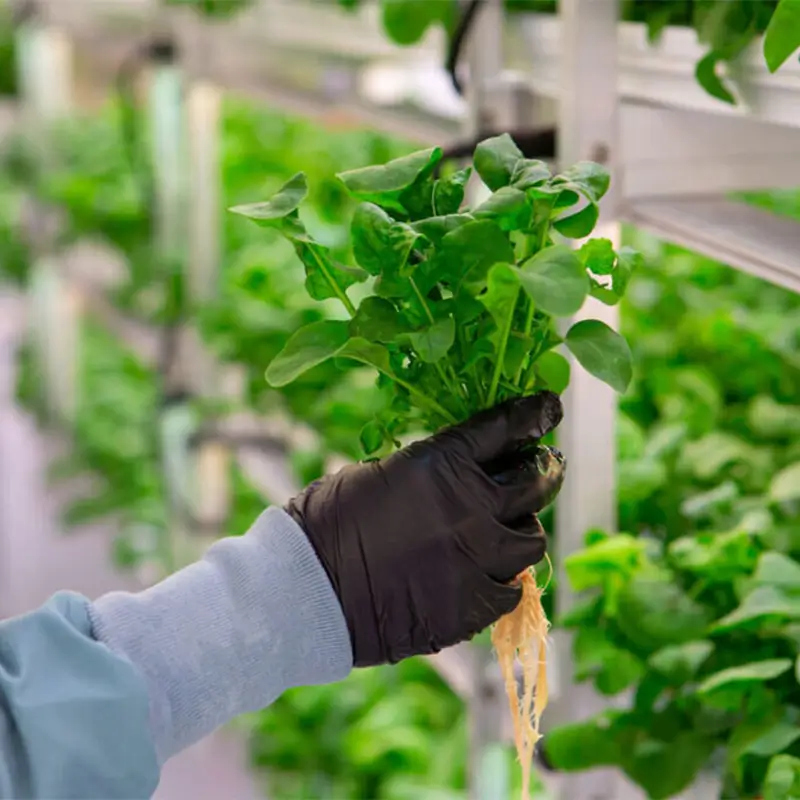
Soilless Farming Using Hydroponic & Aeroponic Technology
In today’s world, where efficient resource use and reduced reliance on natural conditions have become necessities, soilless farming has emerged as an innovative, transformative solution. Hydroponic and aeroponic technologies, leveraging engineering, botany, and modern innovations, enable high-quality, high-yield crop production even in urban areas and regions with unsuitable soil.
Given climate change, population growth, and limited natural resources, the need for new approaches in food production is more pressing than ever. In this context, soilless farming is recognized as a promising pathway to ensure food security and sustainable development.
Definition and Principles of Soilless Farming
Soilless farming comprises modern methods of crop production that do not rely on soil as a growth medium. Instead, plants are cultivated in controlled environments using nutrient solutions, air, or other alternative media.
– Fundamentals of Hydroponics
Hydroponic technology is based on supplying nutrients through aqueous solutions without soil. In this method, plant roots are directly immersed in nutrient-rich solutions containing minerals and organic matter, allowing precise control over growth conditions such as temperature, pH, and mineral concentrations.
Using hydroponic systems not only boosts productivity but also significantly reduces water consumption. Moreover, this technology enables cultivation in urban and confined spaces, an advantage that has grown with rapid urbanization.
Some researchers believe that hydroponics can address issues caused by soil pollution and deteriorating soil quality, as eliminating soil reduces many environmental contaminants and pest problems.
Hydroponic Technology: Structure, Function, and Innovations
Hydroponic technology was introduced years ago in research laboratories and, with recent advancements in control and digital technologies, has been industrially implemented. Today, it is recognized as one of the most effective methods for cultivating high-quality crops in greenhouses and urban settings.
– Principles of Hydroponic Operation
In hydroponic systems, plant roots are suspended in nutrient solutions while environmental factors such as light, temperature, and humidity are precisely controlled. The absence of soil helps prevent soil-borne diseases and pests, thereby increasing crop yields.
According to a report by the UN Food and Agriculture Organization (FAO), by 2023 over 20% of global greenhouse production utilized hydroponic systems. This statistic highlights the widespread adoption and impact of soilless technologies in modern agriculture.
Hydroponic technology not only conserves water but, by creating a fully controlled environment, also prevents nutrient loss and continuously improves product quality.
– Dr. Richard Stevenson: “Hydroponic and aeroponic technologies enable crop production in urban areas and regions with unsuitable soil, while boosting productivity and reducing water consumption.”
Dr. Stevenson, a leading professor of sustainable agriculture at the University of California, reiterates the importance of modern technologies in transforming food production.
Other features of hydroponic systems include reduced dependence on weather conditions, more precise control of plant growth, and suitability for urban implementation—all of which significantly contribute to food security and sustainable agriculture.
Aeroponic Technology: Advanced Methods of Plant Nutrition
Aeroponics is a modern soilless agricultural technology that specifically focuses on nourishing plant roots with fine droplets of nutrient solutions suspended in air. In this method, plants grow without a liquid or solid medium, benefiting from increased oxygen for respiration.
– Aeroponic Operation and Benefits
In aeroponic systems, plant roots are suspended in open air, and nutrient solutions are delivered as a fine mist. This method enhances gas exchange at the roots and accelerates plant growth.
The main advantages of aeroponics include optimal water use, lower energy costs, and increased crop productivity. Research shows that due to the greater oxygen supply, aeroponics can outperform hydroponic systems in promoting plant growth.
According to market reports published in 2023, aeroponic technology has experienced significant growth, with forecasts predicting that the market will reach $10.2 billion by 2028. This trend reflects strong investor confidence and economic optimism in this innovative field.
– Dr. Michael Brown: “Aeroponics, by providing more oxygen to the roots, allows for faster and healthier plant growth while being more resource-efficient.”
Dr. Michael Brown, a senior researcher at the Advanced Agricultural Research Center, emphasizes the importance of modern technologies in enhancing performance and reducing resource consumption.
Furthermore, the application of aeroponics in producing crops that require precise nutritional management demonstrates its potential to fundamentally transform traditional cultivation methods.
Global Market Analysis and Statistics in Soilless Farming
In recent decades, driven by population growth and climate change, the soilless farming market has experienced remarkable expansion. International organizations and reputable statistical agencies have highlighted the importance of this technology in ensuring food security and sustainable development.
– Statistics from Reputable Global Institutions
According to a report by the UN Food and Agriculture Organization (FAO), by 2023 over 20% of global greenhouse production utilized hydroponic systems. This figure reflects the widespread acceptance of soilless technologies in developed countries.
Additionally, the International Hydroponic Association (IHA) reported that in 2022 the global hydroponic market was valued at $9.5 billion, with forecasts expecting it to reach $16.6 billion by 2027 at a CAGR of 11.3%. These figures underscore the growing trend of investment in this sector.
Moreover, 2023 reports indicate that aeroponic technologies have also seen significant growth and achieved a prominent economic position in global markets. Increased investment in these technologies has led to reduced production costs and improved product quality.
These global statistics not only demonstrate the upward trend in soilless farming technologies but also emphasize the need for international investment and development in these systems.
Impact of Modern Technologies on Agricultural Productivity and Food Security
Hydroponic and aeroponic technologies, by creating controlled environments and optimizing resource use, play a crucial role in boosting agricultural productivity and ensuring food security. They are especially viable alternatives to traditional farming in regions facing water and soil limitations.
– Role of Technology in Boosting Production Efficiency
Advanced control and digital systems enable continuous monitoring of plant growth, allowing for swift corrective actions if any issues arise. For instance, smart sensors that detect moisture and nutrient levels in solutions have greatly enhanced the performance of hydroponic systems.
On the other hand, aeroponic technology, by ensuring sufficient oxygen supply to plant roots, accelerates growth and improves product quality. In addition to reducing water usage, it lowers production costs and increases profitability for farmers.
According to Sarah Johnson, CEO of the U.S. Urban Agriculture Association:
– Sarah Johnson: “Using hydroponic systems, high-quality and high-yield crop production is achievable even in small urban spaces, thereby enhancing city food security.”
This quote underscores the importance of modern technologies in addressing the challenges of population growth and limited natural resources.
Overall, the integration of statistical data and practical experience demonstrates that investing in these technologies can play a key role in reducing pressure on natural resources and boosting agricultural productivity.
Challenges and Investment Opportunities in Soilless Farming Technologies
Despite numerous benefits, adopting hydroponic and aeroponic technologies comes with challenges. Key obstacles include high initial costs, the need for technical expertise to manage the systems, and potential issues from disruptions in resource supply.
– Economic Analysis and Market Opportunities
Although the setup costs for soilless farming systems may initially be higher than traditional methods, reduced operational expenses and increased yields make investments in this area economically attractive. Economic studies have shown that, over the long term, using hydroponic and aeroponic technologies can reduce water and energy consumption, resulting in significant profitability for investors.
Furthermore, the emergence of new markets and growing demand for organic, pest-free products offer ample opportunities for startups. Market analyses predict substantial investment growth in this field in the coming years.
In this context, policymakers and government agencies in developed countries are providing financial and credit incentives to facilitate market entry. These measures, combined with scientific research and the development of modern technologies, lay the groundwork for a sustainable ecosystem and secure investments.
Given the global market’s upward trend and increasing public awareness of sustainable agriculture, investment opportunities in this field continue to expand. Investors can make better decisions regarding market entry by leveraging data and consulting experts.
Future Outlook: Upcoming Innovations in Soilless Farming
As the demand for healthy, sustainable food resources grows, soilless farming technologies are expected to play an even greater role in meeting the needs of a growing population. Ongoing global research is focused on developing smart systems and optimizing resource use.
– Future Scientific and Economic Forecasts
Experts believe that by harnessing modern technologies such as the Internet of Things (IoT), artificial intelligence, and big data analytics, it will be possible to more accurately predict environmental conditions and improve the performance of hydroponic and aeroponic systems. These advances could lead to increased productivity and reduced production costs.
Moreover, the global soilless farming market is expected to grow significantly in the coming decades. Economic forecasts suggest that with the adoption of modern technologies, the market’s value could multiply several times over its current size.
Recent scientific studies also indicate that integrated smart systems in soilless farming can pave the way for further innovations—ranging from improved nutrient delivery and reduced water and energy consumption to lower greenhouse gas emissions.
In this context, international collaborations, partnerships between universities and industries, and the promotion of applied research are among the key success factors.
Strategic Recommendations for Sustainable Development
A detailed review of the fundamentals, technologies, global statistics, and economic opportunities reveals that soilless farming is not only a modern innovation but a necessity for ensuring food security and sustainable development today. Hydroponic and aeroponic systems offer comprehensive solutions for optimizing resource use and increasing efficiency, opening new avenues for investment and innovation.
It is recommended that investors, policymakers, and researchers focus on expanding these technologies by building collaborative ecosystems and drawing on successful international experiences. Establishing the necessary infrastructure, offering financial incentives, and supporting applied research can smooth the path for a transformative shift in soilless farming.
Emphasizing modern technologies alongside optimized traditional practices can fundamentally transform the agricultural industry and significantly mitigate challenges posed by climate change and resource limitations.
In conclusion, with an optimistic outlook for the future, forthcoming innovations in soilless farming promise unparalleled opportunities to enhance productivity, reduce production costs, and create sustainable employment. This transformation will have positive economic, environmental, and social impacts.
Sustainable development in soilless farming requires aligning economic, social, and environmental goals—a balance achievable through technical expertise, smart investment, and government support.
Consequently, the critical role of education and knowledge transfer to new generations cannot be overlooked. Offering training courses, specialized workshops, and establishing research centers will lay the foundation for advancing new knowledge and technologies.
Implementation Strategies and Future Outlook for Soilless Technologies
For the successful deployment of soilless farming technologies, designing and executing comprehensive strategic solutions is essential. Establishing appropriate infrastructure, investing in research and development, and fostering public–private collaboration are key to enhancing performance and productivity in this field.
– Key Strategies for Implementing Modern Technologies
Successful soilless farming projects require comprehensive, long-term strategies that include detailed market analysis, setting key performance indicators, and educational programs to elevate technical expertise among farmers and project managers.
One of the most critical aspects is defining the role of information and digital technologies in monitoring and controlling production processes. Smart systems enable real-time awareness of environmental conditions, allowing prompt adjustments when necessary.
Moreover, establishing communication networks among research institutions, universities, and companies in the soilless farming sector can greatly facilitate knowledge exchange and technology transfer.
Similarly, the use of digital platforms as communication and management tools provides access to accurate, timely data, thereby enhancing strategic decision-making in agriculture.
The Importance of Integrating Knowledge, Technology, and Investment in Soilless Farming
Achieving long-term goals in soilless farming requires the convergence of knowledge, technology, and capital. Building bridges among researchers, technical experts, and investors can lead to the flourishing of these technologies and their broader adoption.
– Interdisciplinary Collaboration and Innovation in Practice
One of the keys to success in modern technologies is interdisciplinary collaboration, which arises from the convergence of diverse ideas and experiences. Universities, research centers, and private companies can develop innovative solutions by exchanging knowledge and technology.
For example, professionals from engineering, life sciences, and information technology have collaborated on soilless farming projects, achieving remarkable improvements in the performance of hydroponic and aeroponic systems. Such collaborations not only advance scientific progress but also pave the way for new investments.
Looking ahead, the integration of knowledge and technology is expected to bring about fundamental changes in agricultural production and enhance food security.
Ultimately, increasing public awareness about the importance of investing in modern research and supporting sustainable projects will play a key role in advancing developmental goals.
Final Recommendations for the Development and Utilization of Soilless Farming Technologies
Based on the analyses presented, hydroponic and aeroponic technologies possess tremendous potential to transform agriculture and ensure global food security. However, success in this field requires the implementation of strategic solutions, smart investments, and a culture of innovation among all stakeholders.
Economically, reduced operational costs and increased production efficiency pave the way for greater profitability. Environmentally, lower water and energy consumption and diminished negative impacts are additional benefits of these technologies.
Experts assert that sustainable development in soilless farming demands coordination and synergy among governmental, private, and academic sectors. Establishing legal frameworks and providing financial incentives can play a significant role in launching and expanding these technologies.
– Dr. Richard Stevenson: “Investment in modern agricultural technologies will pave the way for sustainable development and food security in the near future.”
This final quote reaffirms the importance of integrating science, technology, and capital to advance sustainable development goals and paves the way for a fundamental transformation in the agricultural industry.
Overall, it is recommended that all stakeholders, with a long-term perspective on climate change and the growing needs of the population, seize the opportunities offered by soilless farming technologies and invest in this field to simultaneously boost economic and environmental development.
By adopting innovative management and scientific approaches, hydroponic and aeroponic technologies can serve as successful models for other production sectors, taking effective steps toward a sustainable and secure future.