
Greenhouse eDNA for Early Pathogen Detection
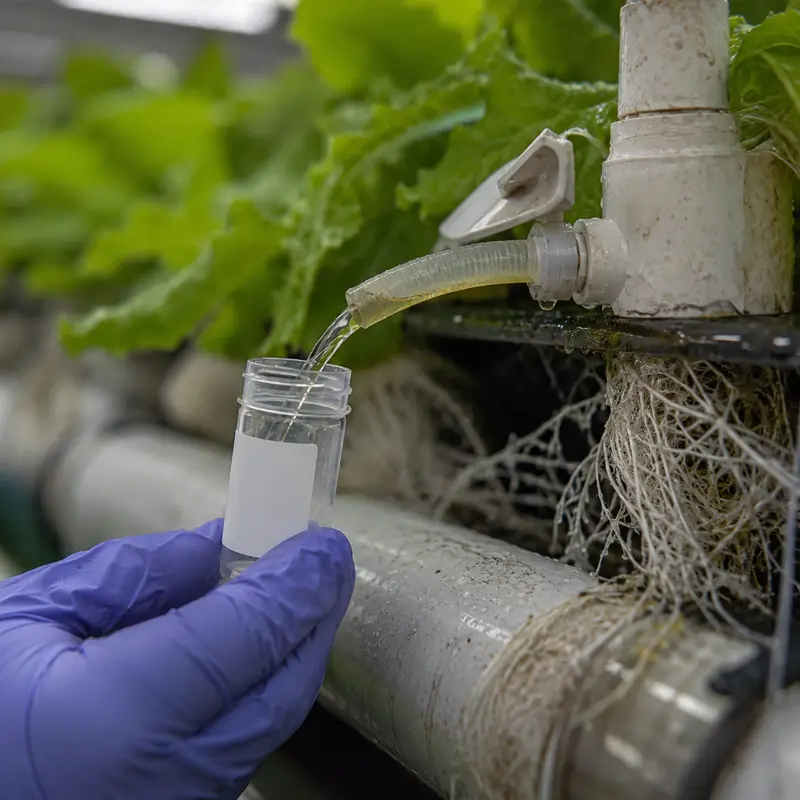
eDNA Monitoring in Greenhouses and Hydroponics for Early Pathogen Detection
In a modern greenhouse, plant disease is usually noticed only after part of the damage has already begun. Leaf yellowing, root rot, fruit spots, or reduced growth are signs a production manager can see with the naked eye, but the pathogen is often already present in the water, air, rhizosphere, or plant surface before that point. This hidden gap between the entry of the disease agent and the appearance of symptoms is exactly where eDNA monitoring becomes an important management tool for greenhouses and hydroponic systems. Environmental DNA, or eDNA, refers to genetic material released into the production environment by fungi, oomycetes, bacteria, viruses, and their biological residues. Its core value lies in early warning, not in fully replacing classical plant pathology diagnostics.
In hydroponic systems, the importance of this early warning becomes clear sooner than in many other growing environments, because circulating water or nutrient solution is not only a carrier of nutrients; it can also become a shared pathway for the movement of root-borne disease agents. When an organism such as Pythium or Phytophthora enters the water circuit, a delayed decision can lead to broad disinfection, plant removal, harvest interruption, or preventive use of chemical inputs. eDNA monitoring can shift that decision from reacting to visible symptoms toward managing risk, provided that sampling, test validation, and result interpretation are designed together. In such a structure, molecular testing becomes part of disease management, water economics, and production security in a controlled environment.
– Hervé Van der Heyden and colleagues, researchers of a review article in Agronomy for Sustainable Development: “Close and regular monitoring is necessary to achieve adequate control with minimal pesticide use.”
This logic also matters from an investment perspective for agricultural technology holdings. Greenhouses and hydroponic systems are typically operated with high fixed capital, precise water use, climate management, and strong sensitivity to production downtime. As a result, disease is not merely a biological issue; it can directly affect cash flow, product quality, and supply capacity. eDNA monitoring gains economic value when it is combined with a periodic sampling plan, action thresholds, targeted water disinfection, rapid quarantine of suspicious plants, and plant pathology consultation. Technology does not make decisions on its own; molecular data becomes useful only when it is interpreted alongside crop condition, farm history, humidity and temperature conditions, and the water circulation pattern.
Why Is eDNA Still an Emerging Technology in Food Production Systems?
Despite the rapid growth of molecular methods, the use of eDNA in food production still represents only a small share of the overall body of eDNA studies. In the systematic review by Kestel and colleagues, eDNA-based monitoring in food production systems was reported to account for only 4 percent of all eDNA studies. The same research file shows that 60 percent of these studies focused on soil and plant substrates, 60 percent on microbes and insects, and 42 percent were geographically concentrated in Europe. This distribution shows that greenhouses and hydroponics are still in the transition phase from research and limited diagnostic services to operational decision-support systems.
– J. H. Kestel and colleagues, authors of the Science of the Total Environment article: “eDNA-based monitoring in food production systems accounts for only four percent of eDNA studies.”
The emerging nature of this field should not be mistaken for scientific weakness. The main issue is that food production environments are more complex than many classic eDNA applications, because the final decision must be connected to crop management, operating costs, and the risk of economic loss. In a hydroponic tank, a DNA signal may come from a living pathogen, a nonviable spore, cellular debris, or genetic material remaining after disinfection. Therefore, a positive result alone does not necessarily mean an active infection or an immediate need for spraying, and a negative result cannot fully rule out disease risk if the sample volume is too small, PCR inhibition occurs, or the pathogen is unevenly distributed.
Correctly defining the intended use is the first condition for designing the system. If the goal is to detect a specific pathogen, qPCR or RT-qPCR usually provides a more practical and interpretable pathway, because primers and probes are designed for a defined target and the result is closer to a quantitative measure. If the goal is multi-target screening, metabarcoding and amplicon sequencing create a broader picture of the microbial or fungal community, but read abundance is not necessarily equal to the number of living cells or the level of disease risk. If the goal is non-targeted monitoring, shotgun metagenomics and nanopore sequencing become more attractive, but they depend more heavily on bioinformatics and reference genome databases.
How Do Water and Air Sampling Reveal Disease Warnings Earlier?
– Recirculating Hydroponic Water as a Shared Pathway for Root Pathogens
In recirculating hydroponics, water and nutrient solution are the best starting points for targeted monitoring of root-borne pathogens. A water sample can indicate the presence of genera such as Pythium or Phytophthora before root rot becomes visible at the plant level. However, a water sample is not a simple matrix. Factors such as dilution, flow, biofilm, filtration, UV radiation, ozone, peroxide, and DNA adsorption to particles can alter the signal intensity. For this reason, the monitoring plan must define sample volume, sampling time, sampling location within the circuit, repeat interval, and water disinfection conditions in a consistent and reviewable way.
– Oregon State University Plant Clinic, an academic plant diagnostic center: “Water samples for Pythium or Phytophthora are tested by filtration and culture; a minimum of 600 milliliters is required.”
The diagnostic service at Oregon State University provides a practical benchmark for understanding the scale of water sampling. In that service, a minimum of 600 milliliters of water is requested for Pythium or Phytophthora testing, and the reported method relies on filtration and culture. This example shows that even in reputable diagnostic services, the output may remain limited to the genus level and may not always reach species-level identification. For a commercial greenhouse, this matters because management decisions about water disinfection, irrigation program changes, or removal of a contamination source must be proportional to the level of certainty in the result.
– Greenhouse Air and the Logic of Trapping Airborne Pathogens
Air, dust, and suspended particles in the greenhouse create another layer of monitoring, especially for fungi and certain dispersive agents that move through the production space before becoming widely established on the plant. An airborne study in northwestern Europe examined 152 air samples from urban rooftops in Denmark, the Netherlands, and the United Kingdom, along with 41 samples from above oilseed rape fields at Rothamsted, using ITS1 metabarcoding and qPCR. In the same research field, it has been reported that Ramularia beticola was detectable by qPCR in air samples about 14 to 16 days before the first symptoms appeared on sugar beet. This figure does not transfer directly to greenhouses and hydroponics, but it carries strong technical significance for the concept of early warning before visible symptoms.
– M. Nicolaisen and colleagues, authors of the Frontiers in Microbiology article: “Pathogens present in the crop were also detected in air samples collected above the same field.”
Transferring this logic to a greenhouse requires greater caution, because enclosed space, fan airflow, misting, plant density, humidity, and daily worker operations can change particle movement patterns. A spore trap, air filter, or liquid sampler is meaningful only when its location and sampling time are aligned with the airflow map and crop risk profile. If air sampling is performed randomly and without repetition, a positive result may show only a transient signal, while a negative result does not rule out a hidden contamination hotspot. Therefore, airborne monitoring for greenhouses must rely on sampling network design and trend-based interpretation, not on a single measurement.
Validation of qPCR and dPCR Is Required to Turn an eDNA Signal into a Management Decision
The high sensitivity of qPCR is its main advantage for early monitoring, but that same sensitivity can turn into a management error without quality control. Every eDNA test must be validated for the same matrix, the same pathogen, and the same protocol, and its limit of detection and limit of quantification must be clear. Transferring a detection limit from plant tissue to water, or from water to air, is not defensible because the chemical composition of the matrix, PCR inhibitors, DNA concentration, and RNA stability differ in each environment. For RNA viruses, RT-qPCR or an appropriate RNA-based method is also required, and RNA degradation during sampling and extraction must be controlled.
– International Organization for Standardization, the international standards body: “This standard provides general requirements for evaluating the performance of methods used to quantify target nucleic acid sequences.”
ISO 20395:2019 is important for eDNA monitoring systems from this perspective. This standard focuses on performance evaluation and quality assurance for methods used to quantify target sequences in qPCR and dPCR, and it provides a framework for reliable measurement. In practice, a greenhouse or service company cannot claim to have operational monitoring simply by purchasing a kit or a qPCR machine. The method must include a positive control, negative control, sampling blank, extraction blank, PCR inhibition control, technical replicates, and physical separation of pre-PCR and post-PCR steps.
– Stephen A. Bustin and colleagues, authors of the MIQE guidelines in Clinical Chemistry: “MIQE specifies the minimum information required to evaluate qPCR experiments.”
The MIQE guidelines are important for the transparency and reproducibility of this part of the work. In eDNA monitoring, failure to report reaction efficiency, standard curve, PCR inhibition, LOD, LOQ, and contamination control makes the result fragile from a management standpoint. dPCR can be useful for absolute quantification when the genetic load is very low or PCR inhibition is a serious issue, but its cost and accessibility are more limited than qPCR for many commercial greenhouses. Therefore, the realistic implementation pathway usually begins with targeted qPCR and, when broader questions arise, expands toward sequencing-based methods.
The Economics of Molecular Testing and the Boundary of Realistic Greenhouse Investment
The cost of eDNA monitoring is not just the price of one laboratory reaction. The real cost includes sampling, transportation, DNA or RNA extraction, consumables, primers and probes, controls, specialized labor, plant pathology interpretation, data storage, and the required replicates. In external service sources, example cost ranges for PCR and qPCR plant molecular tests have been reported at about $25 to $105 per sample, depending on the type of test, the provider, and the number of samples. The Oregon State University water test for Pythium and Phytophthora also costs $122 for in-state Oregon samples and $183 for out-of-state samples.
These figures do not create direct pricing for Iran, but they are useful for designing an economic model. A small greenhouse may face cost pressure from high-frequency monitoring, while a large hydroponic greenhouse can reduce the cost per decision through batch sampling, focus on high-risk points, and selection of target pathogens. WSDA data show that in some services, increasing the number of samples can reduce the cost per sample, and this same principle is important for the commercial design of periodic monitoring. In an operational model, the value of monitoring must be assessed against disease risk, crop value, production downtime cost, and the cost of corrective action.
Technology investment in this field should move away from broad promises and become a measurable service package. A defensible monitoring package could include periodic water sampling, targeted monitoring of several high-risk pathogens, an interpretive report, warning levels, recommendations for disinfection or quarantine, and retesting after intervention. If nanopore sequencing is added to the model, the consumable cost of the flow cell and the stability of consumable supply must also be included in the operational calculation, because external prices such as $840 for an RNA Flow Cell or €740 for an R10.4.1 Flow Cell are not fixed or directly generalizable to the Iranian market. This approach shifts investment from equipment purchasing to sustainable service design.
Metabarcoding and Shotgun Sequencing Versus Targeted qPCR for Precision Greenhouses
Technology selection must begin with the management question, not with the appeal of the tool. Targeted qPCR is suitable when the greenhouse knows which pathogen or pathogen group creates the greatest risk and when the operational decision is built around that same target. By contrast, metabarcoding and shotgun metagenomics are more valuable when the goal is broad screening or non-targeted discovery. These methods can create a wider picture of the DNA present in water or air, but their outputs depend on relative data, barcode quality, sequencing depth, and bioinformatics interpretation capacity.
– Amanda Miko and colleagues, authors of the iScience article: “The sensitivity and accuracy of identification depend on the quality of reference genome databases for pathogens.”
This limitation is especially important for localization. If the genome or barcode database for local pathogens is incomplete, broad methods may misidentify the species, stop identification at the genus level, or report a close relative as a risk agent. For a greenhouse that must decide whether to remove plants, disinfect water, or stop transplant movement, such an error can create operational and commercial costs. Therefore, the more precise pathway is to support targeted qPCR for priority pathogens with a reference database and validated protocol, while using broad methods for exploratory monitoring and for expanding biological knowledge of the production environment.
Airborne DNA sequencing in more recent studies has shown that non-targeted monitoring of crop pests and pathogens is scientifically feasible, but its accuracy is inseparable from the quality of reference databases. In a greenhouse environment, this issue is even more sensitive because high production density, limited crop genotypes, and repeated water circulation can turn a small signal into a major decision in a short period of time. If sequencing data are not accompanied by control design, a reference database, and plant pathology expertise, the result becomes more of a biological report than a disease management tool. The real value of broad methods is that, over time, they strengthen the reference database, the risk list, and the design of future targeted assays.
The Relationship Between eDNA, ToBRFV, and the Health of Tomato and Pepper Greenhouses in Iran
For Iran, the discussion of eDNA should move away from claims of ready and widespread implementation and instead rely on the real need for precise molecular monitoring. Research evidence on ToBRFV shows that important greenhouse viral pathogens in tomato and pepper are a serious issue for the country’s production system. One article published in 2023 reported the complete genome of an Iranian ToBRFV isolate in tomato, and another article published in 2026 reported molecular detection of ToBRFV in greenhouse tomato and pepper in Yazd Province. This evidence does not prove the implementation of eDNA monitoring, but it does create a clear direction for developing validated molecular monitoring in greenhouse environments.
Because of its association with tomato and pepper, ToBRFV is especially important for commercial greenhouses. In the research file, EPPO Standard PM 7/146(2) is introduced as a protocol for detecting and identifying this virus, and this points to an important boundary. eDNA or eRNA monitoring can serve as a tool for screening, warning, and internal management, but it does not replace official quarantine diagnostics or validated protocols issued by specialized organizations. For crops whose sales value, supply contracts, or export potential depend on plant health, this distinction must be made completely clear in laboratory service contracts and final reports.
Iran’s Plant Protection Organization is responsible for protecting the country from the entry, establishment, and spread of quarantine pests and diseases, and any modern monitoring system must be compatible with this institutional logic. A suitable implementation pathway for Iran could begin with limited pilots in large tomato, cucumber, and pepper greenhouses. Such a pilot should first define a small number of target pathogens, several sampling matrices, a fixed schedule, and quality control indicators. The output of this stage should not be merely a positive or negative report; it should be connected to specific decisions such as retesting, water disinfection, restricting transplant movement, or investigating a contamination hotspot. Such a pilot would create the foundation for building a local data bank and gradually standardizing the method.
A Decision Pathway for Turning eDNA Monitoring into an IPM Tool in Greenhouses
eDNA monitoring becomes an IPM tool only when it does not remain isolated as a laboratory test and instead enters the decision cycle. The first step is to define the list of priority pathogens for each crop and each production system, because disease risk is not the same in tomato, pepper, cucumber, or transplant production. The second step is to select the appropriate matrix: recirculating water for root-borne pathogens, air for airborne pathogens, and in some cases leaf surfaces or the rhizosphere to complete the picture. The third step is to define the management response for each warning level, because a test result without a predesigned action only produces information and does not change risk management.
The experience of the Botrytis squamosa monitoring network in Canada, although not directly related to greenhouses and hydroponics, has analytical value for understanding the relationship between monitoring and IPM. In that network, about 20 fields were monitored using rotating traps, and during the 2015 to 2017 period, compared with the 2007 to 2009 reference period, the environmental risk index decreased by 32 percent, the health risk index by 14 percent, and the treatment frequency index by 28 percent. These figures should not be repeated as direct results for greenhouse eDNA, but they show that close monitoring can move protective decisions away from calendar-based use and closer to risk-based use. For greenhouses, this same logic must be redesigned around water, air, climate, and validated testing protocols.
From a regulatory and liability perspective, positive pathogen results are not always just an internal warning. In Belgium, ILVO has stated that if the presence of an organism subject to mandatory reporting is suspected or confirmed during analysis, the matter must be reported to FASFC. This example shows that plant pathogen testing can have regulatory consequences, and the intended use of the test report must be defined from the outset. For Iranian greenhouses as well, distinguishing between screening-based monitoring, internal management diagnostics, and official quarantine diagnostics is necessary to prevent misunderstanding and costly decisions.
A Practical Summary of eDNA Monitoring for Knowledge-Based Investment in Greenhouses
eDNA monitoring in greenhouses and hydroponics is neither a magical tool nor a marginal test. Its value lies in shifting the detection window from the time symptoms are observed to the time a genetic signal is present in the production environment. This shift becomes economically and managerially meaningful only when the test result is connected to action thresholds, a sampling plan, quality control, plant pathology consultation, and corrective action. If this chain remains incomplete, a sensitive technology can turn into ambiguous data and leave decision-makers trapped between positive warnings and falsely reassuring negatives.
For knowledge-based investment, the right starting point is to build a staged and targeted monitoring service. In the first stage, qPCR or RT-qPCR is used for specific high-risk pathogens in water and air, and each protocol is validated with LOD, LOQ, inhibition controls, and contamination controls. In the second stage, the data are combined with greenhouse history, climate, water circulation, and disease events to build warning levels that production managers can actually use. In the third stage, metabarcoding, shotgun sequencing, or nanopore sequencing can be used for broader screening, development of reference databases, and better understanding of the microbial ecosystem of the production environment, without eliminating targeted and standardized diagnostics.
For Iran, a cautious and defensible pathway rests on three pillars: validated molecular monitoring for sensitive crops, development of a reference database for greenhouse pathogens, and connection of test results to the IPM decision-making system. Evidence of ToBRFV in tomato and pepper shows that the issue of greenhouse pathogens in the country is not merely theoretical and requires precise diagnostics. Hydroponic systems and large greenhouses can serve as the starting point for pilots that sample recirculating water and greenhouse air, target a limited number of important pathogens, and link reports to specific management actions. In this model, eDNA moves from being a laboratory technology to a measurable layer for reducing biological risk, managing input use, and supporting production stability.
