
Self-Sufficient Greenhouse with Transparent Solar Panels and Smart Energy Management
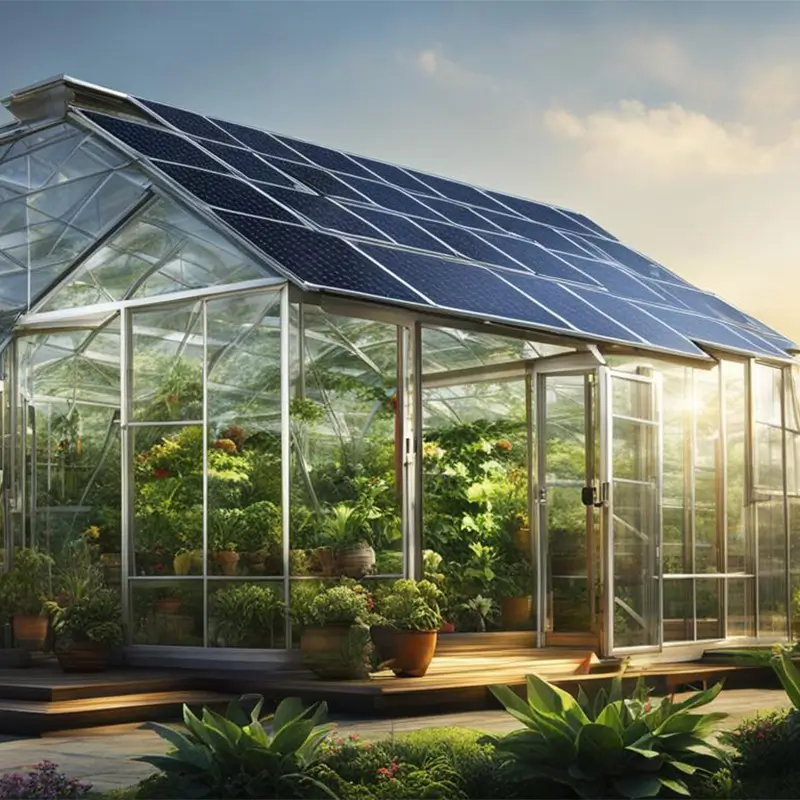
Self-Sustaining Greenhouse with Transparent Solar Panels and Smart Energy Management
In today’s world, where resource shortages and climate change are becoming increasingly pressing, self-sustaining greenhouses that utilize renewable energy and modern technologies are emerging as a key solution. Reliance on the national power grid and the high water consumption of traditional greenhouses make production costly and vulnerable, highlighting the growing need for systems capable of internal energy generation and management.
According to REN21, the agriculture and forestry sectors accounted for approximately 2.1% of global final energy consumption in 2021, which includes the energy required for greenhouse lighting, ventilation, and heating. Additionally, drip irrigation in agriculture consumes around 1,896 petajoules of energy annually, releasing the equivalent of 216 million tons of CO₂—demonstrating the close link between water and energy use in agricultural production.
The smart greenhouse industry has also seen remarkable growth. According to a report by Global Market Insights, the market value of smart greenhouses exceeded $2 billion in 2023 and is projected to grow at an annual rate of over 10% through 2032. This growth is driven by increasing demand for precise environmental control, reduced operational costs, and consistent product quality.
One of the emerging technologies in this field is transparent solar panels, which allow sufficient light to pass through for plant growth while also generating electricity. These panels offer about 60% direct visible light transmission and nearly 70% total light transmission (direct + diffuse), with a power conversion efficiency of approximately 3.3%, producing 30–33 watts per square meter. Implementing this technology can partially meet the greenhouse’s electricity demand onsite.
A study conducted at Murdoch University in Australia showed that greenhouses equipped with transparent photovoltaic windows reduced energy consumption by up to 57% and water usage by up to 29%, all while maintaining crop yield. These findings point to significant potential for reducing both costs and environmental impact in agricultural production.
At the same time, market research indicates that greenhouses with transparent solar cells can generate up to 50% of their required energy onsite, with the remainder supplied through storage systems or the grid—strengthening the vision of full energy self-sufficiency.
Meanwhile, smart energy management systems powered by predictive algorithms and machine learning can analyze and optimize consumption patterns, minimizing energy peaks and maximizing battery storage. This combination of technologies creates ideal conditions for efficient resource use and enhances the environmental sustainability of greenhouses.
Integrating transparent solar panels with smart energy management systems not only reduces dependency on the power grid but also improves precise control over temperature, humidity, and light intensity. This approach ensures sustainable and cost-effective production, particularly in water-scarce and energy-limited regions.
Technical Features and Performance of Transparent Photovoltaic Panels
– Active Material Properties and Compatibility with Plant Light Needs
Transparent photovoltaic panels based on organic and perovskite technologies are engineered to selectively absorb certain parts of the solar spectrum while allowing the rest to pass through for photosynthesis. Studies show that selective absorption in the ultraviolet and near-infrared range—achieved by tuning the molecular structure of the active materials—can allow over 60% of direct visible light to pass through. This enables plants to grow under natural sunlight while the non-visible spectrum is used to generate electricity.
Theoretical analysis and simulations suggest that the optimal spectrum for greenhouse operation can be defined using the plant photosynthetic action spectrum. A model by Meyer and colleagues, based on average visible transmittance (AVT) and power conversion efficiency (PCE), recommends minimal absorption between 400 to 700 nanometers and stronger absorption in the UV and infrared wavelengths for ideal performance.
– Yang Yang, Professor of Materials Science, UCLA: “We’ve designed semi-transparent organic solar cells with enhanced stability so that plants inside greenhouses can still receive sunlight.”
– Energy Conversion Efficiency and Optical Transparency
In practice, early-stage implementations show that transparent panels based on dyed crystals or polymer fibers can achieve up to 86% optical transparency while still reaching power conversion efficiencies of around 10%. Although lower than conventional panels, this efficiency is considered viable for greenhouse applications due to reduced reliance on the grid and the ability to generate energy locally.
A study published in *RSC Advances* reviewed various organic and perovskite technologies, concluding that semi-transparent perovskite cells—with 55% average visible light transmittance and 12% energy conversion efficiency—offer a promising solution for modern greenhouses, while also maintaining simpler structural designs compared to multi-junction alternatives.
Field tests have reported daily power output levels of around 30 to 33 watts per square meter under sunny conditions—enough to cover a significant portion of a mid-sized greenhouse’s electricity demand.
– Structural Considerations and Integration into Greenhouse Enclosures
Mounting transparent panels onto glass or polycarbonate greenhouse structures requires enhanced protection against weather and direct sunlight exposure. A study on ScienceDirect evaluating two semi-transparent OPV modules in greenhouse tunnels recommends using UV-resistant coatings and scratch-resistant transparent layers.
Mechanical durability is a key factor. Technologies such as transparent nanostructured coatings and impact-resistant polyurea-based layers can extend the lifespan of panels to over five years. Performance metrics from dye-sensitized cells also show that transparent photovoltaic windows can retain over 90% of their original efficiency after ten thousand thermal cycles.
Moreover, weather forecasts and annual solar radiation data should be integrated into the greenhouse management system to ensure optimal panel orientation and tilt, maintaining peak energy output without interfering with plant growth.
Smart Energy Management Systems and Optimized Control
At the core of a smart greenhouse lies a network of sensors and actuators responsible for monitoring parameters such as temperature, humidity, light intensity, and air quality. These data are transmitted in real time to a central hub, where they undergo initial preprocessing before being passed to the Energy Management System (EMS). The EMS analyzes environmental conditions alongside the growth requirements of plants and issues control commands to cooling, heating, lighting, and energy storage systems. This ensures optimal consumption and minimizes unwanted energy peaks. A distributed and modular architecture enables easy expansion if the greenhouse size increases or new sensors are added—without requiring a full system redesign.
Reliable and low-power communication layers such as LoRaWAN or NB‑IoT make it possible to scale the greenhouse system by connecting dozens or even hundreds of sensors with minimal energy consumption. Secure protocols like MQTT with TLS encryption protect against cyber threats and safeguard sensitive data. In cloud control centers, historical data are archived and made available for machine learning algorithms, enabling long-term trend analysis and continuous optimization of control strategies.
– Algorithms and Machine Learning for Consumption Optimization
Modern energy management systems go far beyond basic on/off rules—they leverage advanced algorithms based on prediction and multi-objective decision-making. For instance, a study published in MDPI presented a method that minimizes grid consumption while maximizing battery charge, optimizing several parameters simultaneously to achieve energy savings of 25–30%. This approach balances artificial lighting intensity, air temperature, and battery charge status to control grid usage and ensure stable plant growth conditions.
Reinforcement learning algorithms have recently gained popularity. These methods allow a control agent to learn optimal strategies through trial and error in a simulated environment. Field results show that reinforcement learning can reduce temperature and humidity fluctuations by up to 20% while improving energy efficiency by 10–15% compared to traditional methods. These systems also adapt to changing weather conditions and maintain high performance without the need for manual intervention.
– Emiliano Seri, Researcher at Sapienza University of Rome: “Integrating photovoltaic systems in greenhouses not only optimizes land use but also enables precise control and prediction of internal environmental conditions using graph neural networks.”
The integration of the Internet of Things (IoT) and cloud-based systems enables remote access and deeper analytics. Historical data stored in the cloud feed machine learning algorithms, which identify consumption patterns and predict future conditions. This process allows for the creation of detailed dashboards and automatic alerts, giving operators the ability to respond quickly to anomalies. Mobile apps also let users monitor greenhouse status at any time, adjust parameters, and receive both numerical and graphical reports.
– Kangqing Wang, Researcher at the University of Science and Technology of China: “The integration of IoT and machine learning in greenhouses enables precise environmental control, improving productivity and reducing resource waste.”
– Control Loop Optimization with Predictive Modeling
Model Predictive Control (MPC) is considered one of the most powerful methods for greenhouse management. It simulates near-future greenhouse behavior and solves a multivariable optimization problem to determine control commands. Research has shown that MPC can reduce energy consumption by 20–25% compared to traditional methods and respond more effectively to sudden changes in temperature or sunlight. MPC is especially effective during unstable seasons with fluctuating weather, helping maintain product quality.
In a practical implementation within a commercial greenhouse, the MPC algorithm was based on simplified dynamic models and 15-minute sensor data. It maintained ideal conditions—temperatures between 18–25°C and humidity levels of 60–70%—while reducing gas and electricity usage by 18% and 22%, respectively.
The use of lithium-ion or flow batteries alongside solar panels allows surplus energy to be stored and used during peak demand hours. A study in *Nature Scientific Reports* found that adding an energy storage system increased self-sufficiency from 43.43% to 69.45% in summer, and from 24.17% to 81.36% in winter. This significantly reduces strain on the power grid and the cost of emergency energy supply.
Smart demand scheduling can also shift non-essential loads to off-peak hours or draw from storage, depending on electricity pricing. This strategy not only lowers costs but also supports grid stability and enables participation in energy flexibility markets.
A Canadian study showed that greenhouses implementing smart energy management systems reduced their annual energy costs by up to 30%, achieving return on investment in under three years. This success is a driving force behind the rapid expansion of smart greenhouses across the Americas and highlights the efficiency of combining modern technologies for sustainable productivity.
Field trials in European greenhouses confirm that a well-balanced combination of sensors, predictive algorithms, and energy storage can raise the self-sufficiency rate to over 75%, virtually eliminating the risk of power outages. This breakthrough opens up new horizons for expanding smart agriculture and lowering operational costs in remote areas.
Economic Analysis and Market Outlook for Self-Sustaining Greenhouses
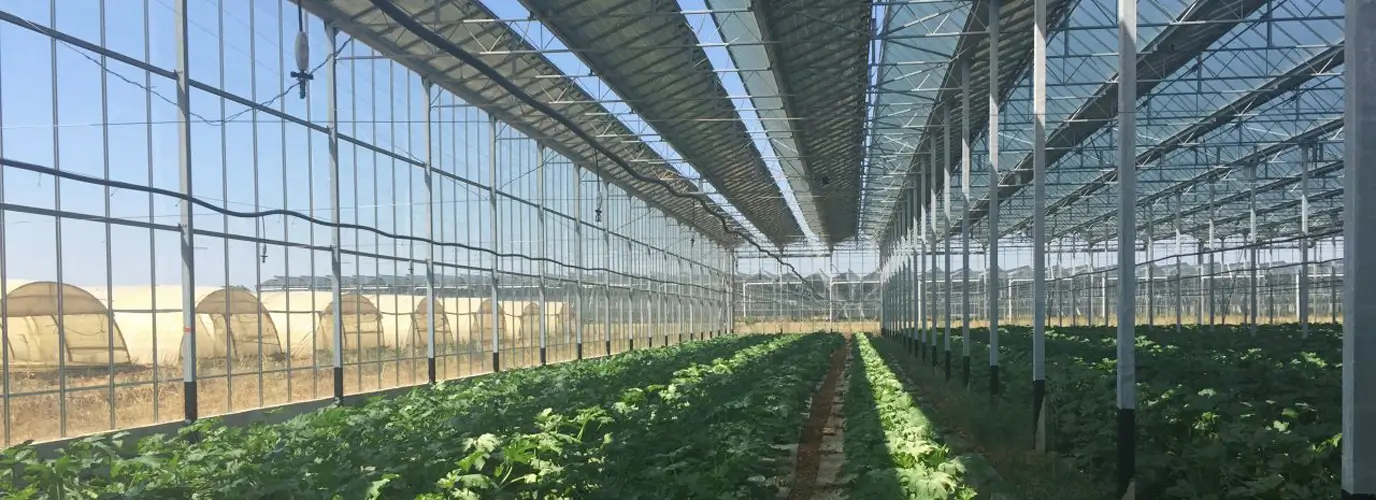
The smart greenhouse market was valued at over $2 billion in 2023 and is projected to grow at an annual rate of more than 10% through 2032. This reflects the increasing interest among producers in reducing operational costs and improving product quality. On the other hand, the transparent solar cell market was valued at $16.47 million in 2023 and is expected to reach approximately $57 million by 2030, growing at a compound annual rate of around 19.4%. This rapid expansion indicates strong adoption of semi-transparent photovoltaic technologies in greenhouses, with promising applications in both agriculture and architecture.
Additionally, the global solar energy market is expanding at a fast pace. As of 2024, the market size stood at $148.39 billion and is expected to grow at an annual rate of 23.1% through 2032. These figures highlight the rising demand for renewable energy sources and the numerous investment opportunities associated with clean energy systems such as transparent solar panels.
– Investment Costs and Return on Investment
Energy costs—particularly those related to cooling and artificial lighting—account for 25–30% of total operating expenses in greenhouse production. For example, in Quebec, Canada, energy expenses in greenhouse operations represent between 25% and 30% of total costs. Under these conditions, reducing grid electricity usage through transparent solar energy and smart energy management systems can directly lower operating expenses.
Simulation studies focusing on identifying and optimizing key EMS parameters have shown that these systems can reduce grid consumption by over 50% compared to traditional methods. As a result, the reliance on external energy sources—and associated costs—can be significantly decreased. With average installation costs of transparent panels ranging from €40 to €70 per square meter (depending on type and transparency), and a 30% reduction in energy expenses, return on investment is achievable in less than five years.
In the European Union, new policy guidelines now allow agricultural land equipped with agrisolar systems to qualify for direct payments under the Common Agricultural Policy (CAP). These incentives—delivered through subsidies, low-interest loans, and tax exemptions—help reduce investment barriers and accelerate the adoption of innovative technologies.
Germany’s “Solarpaket 1” also outlines incentives across four main areas: ground-mounted systems, rooftop installations, energy storage, and grid connection. The package prioritizes Agri-PV systems in EEG tenders, encouraging the rapid development of dual-use projects that combine agriculture and clean energy production. This reflects a growing governmental focus on integrating food and energy systems.
According to a report by the Joint Research Centre (JRC) of the European Commission, covering just 1% of the EU’s agricultural land with agrivoltaic systems could yield 944 gigawatts of installed solar capacity—meeting half the projected demand by 2030—while still allowing continued agricultural activity. This demonstrates the vast potential of combining farmland with renewable energy generation.
– Robert Habeck, German Minister for Economic Affairs and Climate Action: “Solarpaket 1 is a powerful driver for rapid solar energy expansion, and Agri-PV can play a pivotal role in achieving rural energy independence.”
A study by Boston Consulting Group reveals that Agri-PV systems across small, medium, and large farm models can generate between €15,000 and €235,000 in additional annual income. This helps farmers maintain financial stability during the transition to regenerative agriculture and reduces investment risk.
Projects like HyPErFarm are actively testing business models for agrivoltaics and integrating emerging technologies such as solar hydrogen production and bifacial panels. These initiatives aim to optimize investment strategies and adoption pathways, paving the way for a new value chain that synergizes agriculture and renewable energy.
Outlook on the Development of Self-Sustaining Systems
– Real-World Examples of Transparent Agrivoltaics
In recent years, several pilot projects across Europe and the United States have tested the operational efficiency of greenhouses equipped with transparent photovoltaic panels. One study published in *Nature Scientific Reports* showed that segmented designs of transparent panels could supply 15–20% of the greenhouse’s energy needs without compromising plant photosynthesis. Simulated models aligned closely with real-world performance data.
– Integrating CHP Systems for Thermal and Electrical Autonomy
In a large-scale greenhouse in Quebec, Canada, a Combined Heat and Power (CHP) system powered by natural gas was installed. It covered 80% of the greenhouse’s heating demand and more than 50% of its electricity needs, ultimately reducing overall energy costs by 28%. Additionally, surplus electricity was fed back into the grid.
– Resource Management and Energy Storage Integration
A comprehensive study published in *MDPI* found that combining battery storage systems with intelligent EMS algorithms could reduce grid energy consumption by up to 30% and boost energy self-sufficiency to 65%. These results were based on 12 months of continuous operation in modern greenhouse environments, underscoring the importance of integrating both hardware and intelligent control software.
– David Nield, ScienceAlert Contributor: “Greenhouses equipped with semi-transparent solar cells can generate electricity without disrupting plant growth, while also helping regulate internal temperatures.”
– Luminescence Applications and Commercialization Challenges
The “Solar Noise Barrier” project in the Netherlands is a notable example of using luminescent solar concentrators (LSCs) in urban settings. Utilizing semi-transparent panels, it produces an average of 16 watts per square meter under diffused lighting conditions. However, key challenges remain, such as the high cost of luminescent materials and reduced efficiency at elevated temperatures.
– Light-Responsive Optical Coatings for Adaptive Illumination Control
Studies published in *Advanced Optical Materials* explored nanostructured coatings that automatically adjust visible light transmission in response to ambient lighting conditions. These smart materials offer promising solutions for advanced greenhouses, aiding in optimal light distribution and energy efficiency.
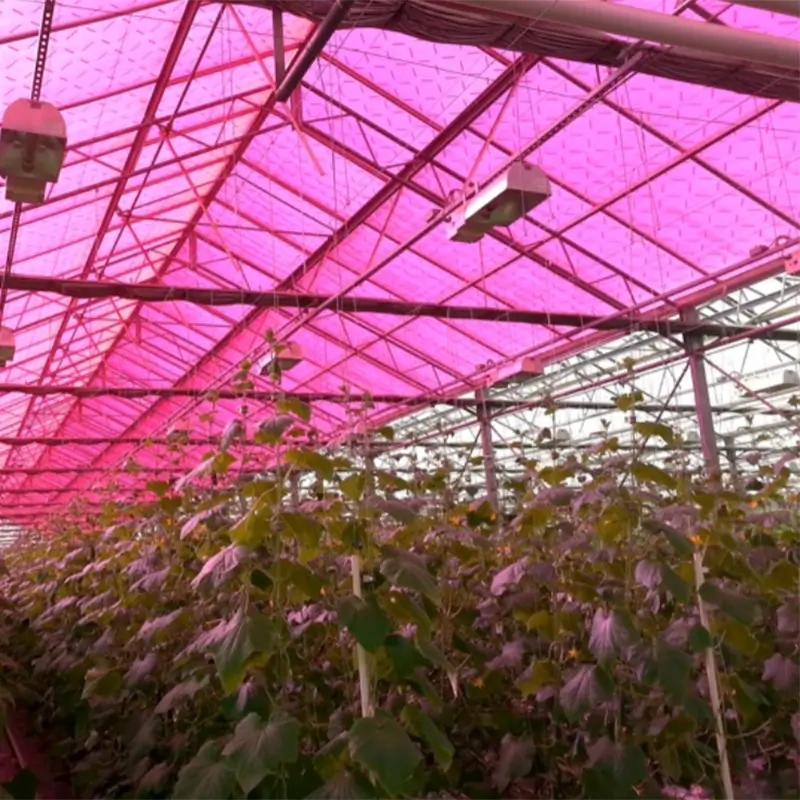
One of the key operational challenges of transparent panels is their vulnerability to impact, hailstorms, and UV radiation, as well as the need for automated cleaning systems. On the other hand, a report by the European Joint Research Centre (JRC) suggests that covering just 1% of agricultural land with agrivoltaic systems could add 944 gigawatts of solar capacity—significantly contributing to CO₂ emissions reduction.
Emerging technologies such as responsive perovskite cells, quantum luminescence, and 5G-enabled Internet of Things (IoT) are set to revolutionize energy management in greenhouses. With improvements in material durability and reduced manufacturing costs, commercial models of transparent panels with over 15% efficiency and a lifespan of more than ten years are expected to enter the market within the next five years—paving the way for innovative agri-energy business models.
Case studies have shown that combining transparent solar panels with smart energy management systems can reduce energy costs by 30–50% while enhancing environmental sustainability. However, to achieve scalable deployment, simultaneous focus is needed on improving material durability, lowering installation costs, and implementing supportive government policies—so that self-sustaining greenhouses become a practical and widespread solution for agricultural production.