
Advanced Hydrocolloid Coating to Enhance Seed Resilience
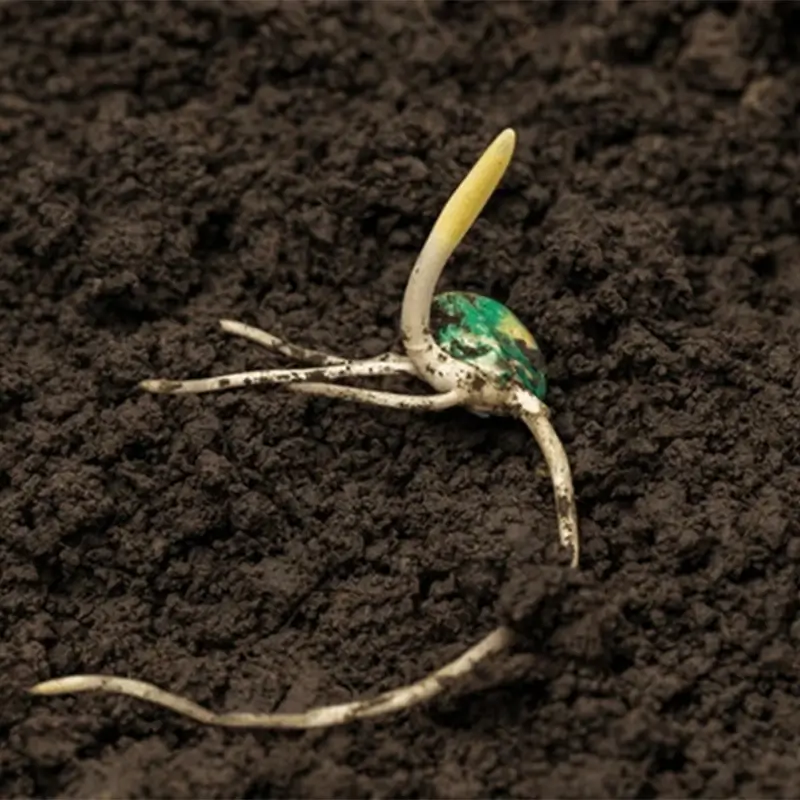
Enhancing Environmental Stress Tolerance with Advanced Hydrocolloid Seed Coatings
In recent years, with the growing pressures of climate change and a rising global population, the need for more resilient and high-yield crops has become increasingly critical. Seeds, being the most vulnerable stage in a plant’s life cycle, are particularly sensitive to environmental stressors such as drought and salinity—often leading to significant yield losses. As a response, seed coatings—especially hydrocolloid-based coatings—have emerged as an innovative and sustainable solution. According to Grand View Research, the global seed coating market surpassed $2.0 billion in 2023 and is projected to grow at a compound annual rate of 8.8% through 2030.
Hydrocolloids are a group of water-soluble biopolymers derived from sources such as algae, seeds, and plant gums. These compounds form gel-like structures and increase solution viscosity, enabling them to retain moisture around the seed and support optimal germination and seedling development. Commonly used hydrocolloids include alginate (from brown algae), xanthan gum, guar gum, gum arabic, and carboxymethyl cellulose. Due to their ability to create thin, permeable films, they are considered ideal for seed coating applications in precision and digital agriculture.
Experimental studies have shown that refined hydrocolloid coatings can significantly improve seed tolerance to salinity stress. In a recent study, purified hydrocolloids from Casca Refinery (CAS) were sprayed on wheat seeds and exposed to 125 mM NaCl. Results revealed that, compared to uncoated seeds, germination rate, plant height, K/Na ratio, soluble sugar content, and soluble protein content increased by 13.33%, 46.32%, 37.25%, 8.89%, and 36.22%, respectively.
Beyond salinity resistance, researchers at the Massachusetts Institute of Technology (MIT) have introduced a novel approach to combat drought. Their design features a dual-layer coating: an outer hydrocolloid gel layer that acts like a “blue jacket” to retain every bit of moisture, and an inner layer containing nitrogen-fixing rhizobacteria and essential nutrients. This technology not only offers mechanical protection and hydration but also gradually releases beneficial microbes to support early plant nutrition.
– Benedetto Marelli, Professor of Civil and Environmental Engineering at MIT: “We aimed to design a coating that specifically addresses drought.”
– Jason C. White, Director of the Connecticut Agricultural Experiment Station and Professor of Epidemiology at Yale: “Ensuring global food security in the coming decades is one of the biggest challenges we face. This technology could be a powerful and sustainable tool to achieve that goal.”
Fundamentals of Hydrocolloids and Their Practical Applications
Hydrocolloids are a family of water-soluble biopolymers that form gel-like 3D networks, enhancing water retention and transport. Sourced from natural materials like marine algae, plant seeds, and microbial membranes, they are widely used across industries such as food, pharmaceuticals, and agriculture due to their biodegradability and biocompatibility.
The basic structure of hydrocolloids consists of polymer chains with functional groups such as hydroxyl and carboxyl, which significantly increase the viscosity of solutions by absorbing water molecules. This enables the formation of uniform, permeable films even at relatively low concentrations.
– Chemical Nature of Hydrocolloids
On a molecular level, hydrocolloids typically feature long polymer chains composed of sugar-based monomers linked by glycosidic bonds. For example, alginate is made from mannuronate and guluronate units, while xanthan gum has a more complex profile with glucose, mannose, and glucuronate components. These structures offer gel-forming capabilities, and their rheological properties can be fine-tuned by adjusting pH and the presence of metal ions.
– Sources and Extraction Methods of Hydrocolloids
Plant-based sources include brown algae (for alginate), outer seed tissues (for guar and xanthan gum), and bacterial cells (for glucomannans). Extraction typically begins with soaking raw materials in mild acidic or alkaline solutions, followed by removal of insoluble components and refining steps such as distillation or microencapsulation. Some studies have explored ultrasonic-assisted extraction as a modern technique to boost efficiency and reduce processing time.
For instance, xanthan gum is produced through fermentation with the bacterium *Xanthomonas campestris* and is then purified via filtration and ethanol precipitation. Alginate is extracted by soaking brown algae in CaCl₂ solution followed by precipitation with Na₂CO₃. Hybrid methods—like ultrasonic extraction combined with endocellulases—have shown to improve uniformity and purity of the final product.
– Key Properties of Hydrocolloids in Seed Coating
Hydrocolloid coatings are gaining attention in seed technology for two main reasons: first, their ability to form permeable films that facilitate initial moisture supply; and second, their potential to carry and release nutrients and beneficial microorganisms in a controlled manner. Their viscoelastic properties ensure uniform coating during spraying or immersion, and after drying, a thin yet adhesive layer is formed.
Pseudoplastic behavior and resistance to temperature and salinity fluctuations—especially in xanthan and guar-based coatings—help retain moisture and enable gas exchange under varying environmental conditions. In a study published by Tritean et al. in *Frontiers in Plant Science*, combining alginate with nanobiosilica significantly improved germination rates and early seedling development—germination increased by up to 20%, and drought tolerance in early growth stages improved by over 15%.
– Dawid Skrzypczak, Researcher at the University of Life Sciences in Poland: “A blend of *Lepidium perfoliatum* seed gum and xanthan in the right ratio offers improved viscoelastic properties and structural stability.”
The Role of Hydrocolloid Coatings in Enhancing Seed Tolerance to Drought and Salinity
During germination, plants are highly vulnerable to drought and salinity stress, which can significantly reduce germination rates and early seedling growth, ultimately impacting crop productivity. Using hydrocolloid coatings as a sustainable strategy helps retain moisture and regulate the presence of harmful ions around the seed. These coatings can also encapsulate and gradually release nutrients and beneficial microorganisms to support seedling development during early growth stages.
Multiple studies have shown that hydrocolloid coatings act as a “blue jacket” around seeds, preventing rapid moisture evaporation while also limiting the excessive uptake of sodium ions. These two primary mechanisms form the scientific foundation for using hydrocolloid-based coatings in seed technology.
– Drought Tolerance
In an innovative approach, researchers at the Massachusetts Institute of Technology (MIT) developed a dual-layer coating: the outer layer, made of natural gel-like hydrocolloids, functions as a “blue jacket” that traps moisture around the seed, reducing evaporation and allowing gradual water absorption. The inner layer contains nitrogen-fixing rhizobacteria and essential nutrients that are activated upon contact with soil moisture, delivering early nutritional support to the seedling.
Initial experiments with bean seeds showed that this dual-layer coating not only increased germination rates but also significantly improved growth indicators such as root mass, shoot height, and chlorophyll content. While field trial data are still pending publication, the research team continues to validate results across diverse climatic conditions.
– Benedetto Marelli, Professor of Civil and Environmental Engineering at MIT: “We aimed to design a coating that specifically targets drought while also supplying essential nutrients to support seedling development.”
This technology is simple and low-cost, making it suitable for local use in arid regions—even by small-scale farmers. The outer layer can be applied via dipping, followed by spraying the inner layer.
– Salinity Tolerance
According to recent data, 20–30% of global agricultural land is affected by salinity, a number expected to rise due to climate change. Excess sodium in soil disrupts ionic balance and hinders the uptake of essential elements like potassium, thereby impairing germination.
In a recent study, wheat seeds were coated with purified hydrocolloids derived from activated sludge (CAS) and exposed to a 125 mM NaCl solution (equivalent to 2.74 g/kg of soil). The results showed increases of 13.33% in germination rate, 46.32% in plant height, 37.25% in K/Na ratio, 8.89% in soluble sugar content, and 36.22% in soluble protein content compared to the control group.
– Dawid Skrzypczak, Researcher at the University of Life Sciences in Poland: “Seed coating with hydrogel shows great potential for commercial applications, as it enhances early plant growth and contributes to improved crop yields.”
These findings highlight how hydrocolloid coatings can significantly improve germination conditions in saline soils by limiting sodium uptake and restoring ionic balance. Moreover, depending on the type of hydrocolloid and its processing method, the coating’s rheological properties and nutrient release rates can be optimized.
Overall, the application of hydrocolloid coatings—particularly in arid and saline regions—represents an effective and sustainable tool for enhancing food security and crop productivity. Future research should focus on comparing the performance of various hydrocolloid formulations and conducting field trials across different climates to facilitate commercialization and local adaptation of this technology.

Case Studies and Market Outlook for Hydrocolloid Seed Coatings
Over the past few years, numerous studies have examined the real-world performance of hydrocolloid coatings in field conditions. These investigations typically include small-scale lab trials evaluating germination rates, early seedling growth, and overall crop performance under drought and salinity stress. The results consistently show significant improvements in both biological and economic metrics, paving the way for the commercial adoption of this technology.
One notable study explored the effect of hydrocolloid coatings extracted from activated sludge (CAS) on wheat seeds under 125 mM NaCl salinity stress. The findings revealed a 13.33% increase in germination, a 46.32% increase in plant height, and a 37.25% improvement in the K/Na ratio compared to untreated seeds.
– Case Study: Boosting Wheat Yields with Refined Hydrocolloids
Research conducted at the University of Life Sciences in Poland demonstrated that combining *Lepidium perfoliatum* seed gum with xanthan improved the viscoelastic properties of the coating, resulting in controlled permeability and better moisture availability for seeds. In field trials conducted in a semi-arid region facing water scarcity, germination rates rose by 18%, and final crop yield increased by 12%.
Beyond its moisture-retaining nature, the optimal concentration of gum and the ratio of components were determined through rheological testing. This formulation was designed not only to prevent rapid moisture loss but also to allow gradual water release to the seed, avoiding sudden hydration stress.
This field case study highlights that hydrocolloid seed coatings can be effective not just in laboratory settings but also in real-world farm conditions. However, long-term multi-season trials across various climates are essential to confirm the stability and scalability of these results.
– Global Seed Coating Market Outlook
The global seed coating market has seen remarkable growth in recent years. According to Verified Market Reports, the market was valued at approximately USD 2.3 billion in 2024 and is projected to reach USD 3.8 billion by 2033, growing at a compound annual growth rate (CAGR) of 5.9%. Meanwhile, Grand View Research estimates the market at USD 2.0 billion in 2023, expected to reach USD 3.52 billion by 2030 at a CAGR of 8.8%.
This surge is driven by several key factors: the growing demand for higher crop yields to support a rising global population, limited water resources, expanding saline soils, and technological advancements in polymer and nanocoating development. Major chemical and biotech firms like Solvay, BASF, and Croda are developing a new generation of coatings that not only enhance germination but also enable targeted release of fertilizers, fungicides, and beneficial microbes.
That said, several challenges hinder market expansion. These include the high production cost of purified hydrocolloids, the need for standardized industrial-scale coating methods, and strict environmental regulations. Additionally, the volatile prices of natural raw materials like alginate and guar gum can impact final product costs.
– Senior Analyst, Verified Market Reports: “The global seed coating materials market is projected to grow at a CAGR of 5.9% from 2026 to 2033, reaching USD 3.8 billion by the end of the forecast period.”
To overcome these challenges, suggested solutions include developing local hydrocolloid sources, improving extraction processes through ultrasonic technology and bioreactors, and fostering collaboration between agri-tech companies and farmers. Additionally, government support frameworks and encouragement for university-led R&D can accelerate commercialization efforts.
Ultimately, the future of the hydrocolloid coating market will depend on the industry’s ability to merge scientific efficacy with the real-world needs of farmers and consumers. Given its potential to boost food security and agricultural sustainability, hydrocolloid technology is expected to capture a significant share of the agricultural input market over the next decade.
Future Strategies for Research and Commercialization of Hydrocolloid Seed Coatings
In recent years, the integration of advanced extraction and purification technologies with a deeper understanding of the rheological behavior of hydrocolloids has led to the development of next-generation seed coatings. These coatings go beyond mechanical protection and actively contribute to seed nutrition and environmental regulation. Early research showed that incorporating nanocarriers such as nanosilica into alginate matrices significantly improves water retention and enhances seed longevity. In a recent study, a quadruple-layer coating applied via multiple sprays completely prevented germination decline caused by seed aging.
The mechanism of action operates on three levels: first, the hydrogel-based permeable film acts as a moisture absorber and reservoir; second, ionic bonds between polymer chains and soil ions—particularly Ca²⁺ and Mg²⁺—enhance structural stability and prevent rapid leaching; third, the coating enables the gradual release of nutrients or nitrogen-fixing rhizobacteria to support early plant development.
According to Verified Market Reports, the global seed coating materials market is valued at approximately USD 2.3 billion in 2024 and is projected to reach USD 3.8 billion by 2033, growing at a CAGR of 5.9%. Meanwhile, Grand View Research reported a valuation of USD 2.0 billion in 2023 with a forecasted CAGR of 8.8% through 2030, reflecting strong momentum in this market.
Despite this growth, major barriers to localization and commercialization remain. These include the high cost of purifying hydrocolloids, fluctuating prices of natural sources like brown algae and guar gum, and the need to adapt coatings to industrial planting machinery. Additionally, standardizing the coating process to ensure uniform thickness and density across all seeds is essential.
– José Graziano da Silva: “In many countries, adapting to climate change and ensuring food and nutritional security are one and the same challenge—one that can only be met through investment in innovative technologies and advanced tools.”
Proposed solutions include developing ultrasonic extraction and bioreactor systems to increase hydrocolloid purity, utilizing agricultural waste as alternative raw materials to reduce dependency on imports, and fostering collaboration between universities, tech companies, and farmers. Government support schemes and financial incentives for small-scale production units can also help accelerate the transition from lab to field.
– Research Priorities and Product Development
From a research perspective, wide-scale exploration of hydrocolloid blends with nanomaterials—such as carbon nanoparticles, nanosilica, and metal nanoparticles—should be prioritized to evaluate mechanical properties and nutrient release profiles. Early findings show that incorporating nanosilica into alginate matrices can increase germination by up to 20% and improve drought tolerance by 15%, signaling promising new directions.
The next step involves multi-year field trials across diverse climates to assess the long-term stability and environmental impact of these coatings. It’s also essential to examine biodegradability in soil and the effects of added compounds on soil microbiomes to avoid long-term ecological issues.
In product development, scaling up coating processes—such as spraying, dipping, and extrusion—should aim to reduce costs and increase efficiency. Solid-state production lines and inductive drying methods (e.g., spray dryers) can help ensure uniform coating and minimize seed preparation time.
Implementing this technology in Iran’s agricultural ecosystem will require farmer education and the promotion of collaborative business models. Creating digital platforms to log field performance data, establishing regional test networks, and transparently sharing results can build stakeholder trust and facilitate widespread adoption.
Ultimately, integrating hydrocolloid coatings with innovative financing solutions and joint investment models between knowledge-based holdings and financial institutions can pave the way for affordable, large-scale production. This not only strengthens food security but also creates added value in the agricultural supply chain and supports farmer livelihoods.