
AI Risk Classification in Food Chain Governance
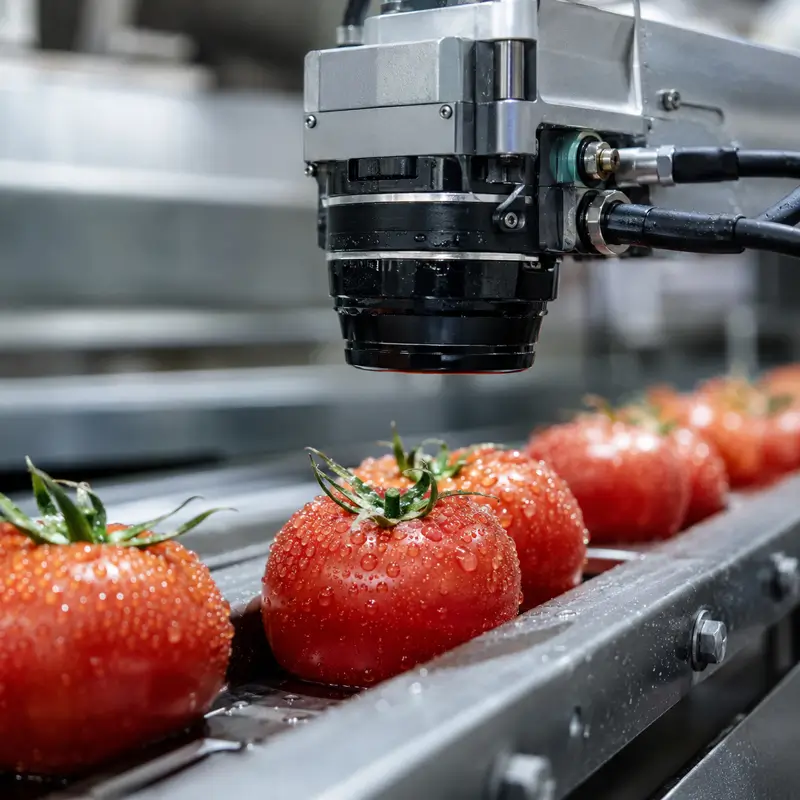
Risk Classification of AI Systems in the Food Chain Based on Modern AI Governance
The food chain, from farm to fork, is no longer merely a network of farms, factories, cold storage facilities, transportation, and retail. It is gradually becoming a data-driven network in which cameras, sensors, predictive models, warning systems, and decision-support tools shape part of everyday decision-making. Artificial intelligence can affect product quality detection, cold chain monitoring, livestock and aquaculture disease alerts, farmer credit assessment, inspection prioritization, and even the decision to stop or continue a production line. This influence shifts the central question from “Is artificial intelligence useful?” to “At which point in the food chain is an AI error intolerable?” Risk classification is a governance-oriented answer to this question because it turns the severity of consequences, the context of use, and the possibility of human oversight into decision-making criteria.
In food systems, an algorithmic error is not always a simple software error. A model’s mistake in predicting store demand may lead to greater waste or inventory disruption, but a mistake in a model used for contamination detection, shipment rejection or acceptance, disease alerts, or cold chain temperature control can affect public health, economic loss, and legal liability. A World Health Organization report shows that unsafe food causes 600 million cases of illness and 420,000 deaths each year, a figure that increases the weight of public health in any discussion of intelligent food systems. The World Bank has also estimated the cost of unsafe food for low- and middle-income economies at about $110 billion per year. Therefore, AI risk in food is not merely a technical issue; it is also an economic, institutional, and policy issue.
– World Health Organization: “Every year, unsafe food causes 600 million illnesses and 420,000 deaths worldwide.”
The Risk-Based Logic of AI Governance
New AI governance frameworks, especially the EU AI Act, do not define risk based on the name of an industry. Under this logic, agriculture or food is not inherently synonymous with high risk. Rather, the function of the system, the effect of the decision, the context of use, and the severity of potential harm are decisive. A farm yield prediction tool, if used only for internal analysis and if it does not directly produce a legal or safety-related decision, occupies a different position from a system that decides on product release, production line shutdown, a farmer’s access to credit, or inspection priority. The value of this logic is that it does not burden low-risk innovation with heavy regulation while also ensuring that sensitive applications are not left without accountability mechanisms.
Under the EU AI Act, two main paths can place a system in the high-risk category. The first path applies when AI, as a safety component or as a product itself, falls under Union harmonization legislation and requires third-party conformity assessment. The second path concerns the applications listed in Annex III, meaning cases that are subject to stricter control because of their impact on rights, safety, access to services, or sensitive decisions. This distinction has practical importance for agricultural robots, autonomous machinery, safety-oriented quality control systems, and industrial decision-support subsystems, because each may move beyond the level of a low-risk tool if it is connected to a safety function or an impactful decision.
Credit assessment in the food chain is a clear example of risk moving from the model into the economic lives of actors. Recital 58 of the EU AI Act considers systems used to evaluate the creditworthiness or establish the credit score of natural persons to be high-risk because their outputs affect access to financial resources or essential services. If the same logic is applied in agriculture, a credit scoring system for smallholder farmers, aquaculture operators, or small suppliers is no longer a simple ranking tool. Such a system can change access to capital, insurance, inputs, or purchase contracts, and in the case of incomplete data or regional bias, it can push data-poor groups away from vital resources.
The Food Chain as a Multilayered Risk Environment
AI risk in the food chain is a combination of model risk, data risk, sensor risk, biological process risk, production line risk, economic decision risk, legal liability, and public health risk. A fish disease detection model may perform acceptably from a statistical standpoint on data from one farm, but its performance may decline in offshore cages with different salinity, temperature, and lighting conditions. A quality control camera may be accurate under laboratory lighting, but it may make errors on an actual production line because of steam, vibration, packaging variation, or surface contamination. Risk classification becomes meaningful when these contextual shifts are taken into account in the design, testing, deployment, and monitoring of the system.
Article 10 of the EU AI Act places training, validation, and testing data at the center of governance for high-risk systems. The origin of the data, the original purpose of collection, cleaning, labeling, updating, statistical representativeness, errors, bias, and data gaps must be documented. In the food chain, this requirement means covering crop varieties, livestock breeds, aquatic species, seasons, regions, packaging types, lighting conditions, temperature, and humidity. A model trained only on images of one product, one season, or one region may produce decisions in real-world environments that appear accurate but are fragile in practice.
– European Union legislator, official text of the EU AI Act: “Training, validation, and testing data must be relevant, sufficiently representative, and, to the best extent possible, free of errors and complete.”
Bias in food systems does not always appear as explicit discrimination. Sometimes the absence of data from small regions, small suppliers, local breeds, less industrialized species, or small cold storage facilities causes a model to be more accurate for larger actors and more error-prone for peripheral actors. If the model’s output is only an analytical recommendation, the harm is more limited. But when that same output affects credit, insurance, shipment acceptance, or inspection priority, data bias becomes an economic and legal risk. For this reason, risk classification must ask from the outset who is affected by the system, which groups are underrepresented in the data, and for whom the model’s error is more costly.
Technical Obligations for High-Risk Systems
A high-risk system in the food chain requires cyclical risk management, not a one-time assessment before installation. Article 9 of the EU AI Act treats risk management as a process that must be established, implemented, documented, maintained, and reviewed throughout the system’s entire lifecycle. This perspective is essential for food-related models because data and environments change rapidly. Season, disease, crop variety, livestock breed, aquatic species, cold chain behavior, and storage conditions can all alter model performance. Therefore, a system that was acceptable on the day of deployment may, without regular monitoring, become a source of error a few months later.
– European Union legislator, official text of the EU AI Act: “For high-risk AI systems, a risk management system shall be established, implemented, documented, and maintained.”
Technical documentation is the link between model design, organizational accountability, and the possibility of external auditing. Article 11 of the EU AI Act requires technical documentation before a system is placed on the market or put into service, and this matter is especially important for the food chain. The documentation must clarify the model version, the data used, performance metrics, limitations, expected error, failure scenarios, and permitted conditions of use. If a contamination detection or quality control system is documented only after a safety incident occurs, the documentation becomes an incident report rather than a prevention tool.
– European Union legislator, official text of the EU AI Act: “The technical documentation of a high-risk AI system must be drawn up before that system is placed on the market.”
Automatic event logging is not merely a software requirement for food systems; it is a tool for reconstructing the chain of decision-making. Article 12 of the EU AI Act refers to logging capabilities throughout the lifecycle of high-risk systems, and in a food environment, these logs should cover the time of the decision, the model version, the input data, the model output, the operator’s decision, and the corrective action. Such event logging improves error traceability in decisions related to product rejection or acceptance, disease detection, production line shutdown, or contamination alerts. Without logs, after an incident the organization is left only with scattered operator accounts, incomplete data, and technical guesswork.
Human oversight in this framework does not mean the ceremonial presence of an operator beside the system. Article 14 of the EU AI Act emphasizes understanding the system’s capabilities and limitations, detecting anomalies, interpreting outputs, the possibility of not using the system, overriding it, and stopping it. In the food chain, this requirement becomes critical when AI outputs are used for production line shutdowns, shipment rejection, drug administration in aquaculture, or contamination alerts. The risk of automation bias appears at this exact point: because of a high model score, the operator may set aside human inspection and treat the system’s output as excessively definitive.
Post-Deployment Monitoring and the Economics of Error
Post-deployment monitoring is especially important for the food chain because model performance usually does not remain stable in real-world environments. Article 72 of the EU AI Act defines post-market monitoring as the collection, documentation, and analysis of performance data throughout the system’s lifecycle. In food systems, this monitoring must reveal performance degradation caused by drift, seasonal errors, species-specific errors, regional errors, and errors related to changes in the cold chain. Metrics such as false negatives, false positives, the human override rate, safety incidents, and changes in accuracy under different environmental conditions are essential for managerial decision-making.
– European Union legislator, official text of the EU AI Act: “Providers shall establish and document a post-market monitoring system.”
Incident reporting is the other side of the same post-deployment responsibility. Article 73 of the EU AI Act requires serious incidents involving high-risk systems to be reported within a maximum of 15 days, while widespread incidents must be reported within a maximum of 2 days, and incidents involving a person’s death within a maximum of 10 days. In the food chain, this timeline can serve as the basis for designing an operational incident procedure, especially for systems involved in food safety, livestock and aquaculture health, or contamination alerts. The practical result is that risk classification is not limited to the time of system purchase or installation; it also extends to the response plan, the responsible team, the reporting pathway, and the evidence that must be provided.
The economics of error in this field must be analyzed through a precise distinction between the cost of compliance and the cost of consequences. World Bank data on the cost of unsafe food shows that food safety-related errors can, on a macro scale, turn into lost productivity and medical expenses. From this perspective, the operating expenses of AI governance—such as maintaining technical documentation, managing data, recording logs, conducting post-deployment monitoring, reporting incidents, updating the quality management system, and responding to conformity assessment—are not merely administrative costs. They are part of a mechanism for reducing losses and increasing trustworthiness in applications whose errors can move beyond the level of a single company.
– World Bank: “Unsafe food creates $110 billion in lost productivity and medical costs each year.”
Three Complementary Models for Turning Risk into Process
The EU AI Act is the key legal anchor for mandatory risk-based regulation, but it is not the only tool organizations can use. The OECD AI Principles have been recognized since 2019 as one of the important intergovernmental standards for trustworthy AI and were updated in 2024 in response to new developments. NIST AI RMF 1.0 introduced a voluntary risk management framework in 2022, built around Govern, Map, Measure, and Manage. ISO/IEC 42001:2023, as an AI management system standard, also specifies the requirements for establishing, implementing, maintaining, and continually improving an AIMS for organizations that provide or use AI products and services.
For food and agricultural companies, the role of the NIST AI RMF is primarily managerial and operational. This framework recommends pre-deployment testing and regular testing during operation, and it connects risk measurement to metrics of trustworthiness, social impact, and human-AI configuration. For models used in contamination detection, disease detection, quality assessment, credit assessment, or demand forecasting, such a framework can serve as the organization’s internal language for discussing risk before or alongside legal obligations. Its advantage lies in flexibility, but that same flexibility also means the absence of legal enforceability and should not be confused with binding law.
ISO/IEC 42001:2023 matters for the food chain from an organizational perspective. A food processing company, cold storage facility, distribution chain, smart equipment manufacturer, or aquaculture operator using AI in sensitive processes does not only need an accurate model; it also needs policies, objectives, responsibilities, processes, controls, documentation, and continuous improvement. This standard does not create a legal high-risk category, but it can provide the managerial foundation needed to implement internal policy, auditing, and accountability. Its proper place is alongside law or a national risk framework, not instead of it.
Canada’s Algorithmic Impact Assessment model turns risk into an operational questionnaire. This official tool includes 65 risk questions and 41 mitigation questions and determines the impact level of an automated decision-making system. For the food chain, its value appears in public-sector applications such as agricultural subsidies, permits, inspection prioritization, support credit, crop insurance, or resource allocation. Its limitation is also clear: this framework was designed for the Canadian federal government and is not, by itself, a general regulatory regime for private companies in the food chain.
A Localization Path for Iran
For Iran, the realistic starting point is to connect risk classification to specific applications in the food chain rather than fully copying a foreign model. The absence of a dedicated and binding framework similar to the EU AI Act does not mean that policymaking should stop. Rather, it shows that decision-makers should use a combination of risk-based logic, data governance, management standards, and impact assessment mechanisms. In such a model, low-impact systems such as demand forecasting, inventory optimization, or non-decisional monitoring should not be treated the same as food safety systems, contamination alerts, farmer credit assessment, or inspection decisions. This distinction is the condition for preserving innovation and reducing risk at the same time.
The first implementation path is to build a national or organizational matrix based on function, consequence, and context of use. In this matrix, a system that merely provides an analytical recommendation falls into a different level from a system that produces an actionable decision about health, safety, financial access, or product acceptance. The criteria should include severity of harm, likelihood of occurrence, the possibility of human control, data quality, regional coverage, impact on natural persons, explainability, event logging, and the need for post-deployment monitoring. Such a matrix can draw inspiration from the logic of Article 6 of the EU AI Act without assuming that all uses of AI in food are equally high-risk.
The second path is to turn risk assessment into an operational questionnaire for public agricultural and food systems. Canada’s AIA tool shows that risk can be moved from the level of policy text to operational questions: questions about the purpose of the system, the type of decision, affected groups, input data, the possibility of appeal, human oversight, and risk mitigation measures. In Iran, such a model could be useful for subsidies, agricultural insurance, support credit, inspection prioritization, licensing, and resource allocation. The value of this approach is that the impact level and necessary obligations are clarified before deployment, so the decision-maker does not think about responsibility only after a problem occurs.
The third path is investment in trustworthiness infrastructure. Data documentation systems, event logging, drift monitoring, explainability, model auditing, and incident management play the same role for an intelligent food chain that quality control plays for a factory. Without this infrastructure, purchasing a model or smart equipment alone does not create governance, and the organization remains vulnerable to error, performance degradation, or legal disputes. For small companies and agricultural startups, this path should be accompanied by simpler forms, phased requirements, and shared tools, because even the EU AI Act itself pays attention to simplifying certain obligations for microenterprises.
A Practical Conclusion for Food Chain Decision-Makers
Risk classification of AI systems in the food chain is not a tool for slowing down technology; it is a tool for placing technology in the correct position of responsibility. A system that monitors packaging quality for internal reporting should not bear the same compliance burden as a system used for product release, contamination detection, or farmer credit scoring. Conversely, a system that directly affects public health, access to financial resources, inspection decisions, or production shutdowns cannot be considered reliable without risk management, data governance, documentation, logs, human oversight, and post-deployment monitoring. This boundary-setting is the core of risk-based governance.
For organizations active in food and agriculture, the right decision begins with practical questions. What decision does the system produce? Who is affected by that decision? What are the consequences of its error? Where did the data come from? Which groups are underrepresented in the data? How does a human control the output? Where are incidents recorded? And after deployment, who monitors performance degradation? If the answers to these questions are not clear, even an accurate model is incomplete at the governance level. The future of AI in the food chain will be built neither through blind trust in algorithms nor through fear of technology. The reliable path runs through precise risk classification, documented accountability, and investment in trust infrastructure.
