
Biotechnology for Drought-Resistant Crops
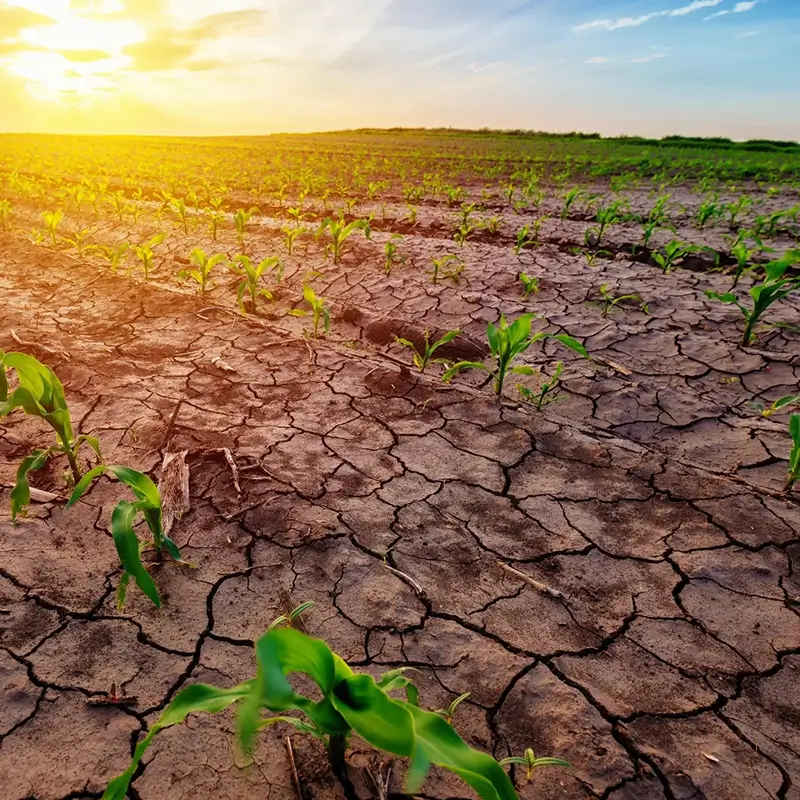
The Application of Biotechnology in Producing Drought and Climate Stress-Resistant Plants
With rapid population growth and widespread climatic changes, agricultural systems around the world face multiple challenges. Drought, altered rainfall patterns, and rising temperatures are among the most significant limiting factors for crop production. In this context, the use of modern biotechnology has emerged as one of the main solutions to enhance plant resistance against climate stresses. This technology, by implementing genetic modifications in plants, enables better adaptation to harsh environmental conditions such as water scarcity and salinity.
In recent years, extensive international and national research in the fields of genetic engineering and plant biotechnology has been conducted. Organizations such as the United Nations Food and Agriculture Organization (FAO) and the International Maize and Wheat Improvement Center (CIMMYT) have provided statistics showing that the use of modern technologies can boost crop yields by up to 20% under water-stress conditions. Moreover, international reports indicate that by 2050, global food demand may increase by up to 70%, while climate change could reduce crop production by up to 25%.
Given Iran’s geographic position and its exposure to climate stresses such as drought, employing biotechnology in agriculture can be a vital strategy for preserving and increasing food production. Leading researchers and experts in this field emphasize the importance of transferring drought resistance genes through modern technologies and believe that this approach can ensure agricultural sustainability amid climate change.
Climate Challenges and Their Impact on Agriculture
Climate change is regarded as one of the greatest threats to global food security. Rising temperatures, reduced rainfall, and frequent droughts have significantly affected agricultural productivity. These changes not only impact crop production but also alter plant growth patterns and reduce biodiversity in agricultural ecosystems.
International organizations such as the United Nations Food and Agriculture Organization (FAO) have stated that climate change could reduce crop production by up to 25%, while global food demand may increase by up to 70% by 2050. These figures underscore the need to adopt innovative solutions to tackle climate stresses.
– The Impact of Climate Change on Crop Productivity
Rising temperatures and diminishing water resources have led to reduced crop yields. In many arid and semi-arid regions, farmers face serious challenges regarding irrigation and soil conservation. The decrease in soil moisture and the increase in water evaporation undermine the conditions necessary for healthy plant growth, necessitating the adoption of new water resource management methods.
Additionally, climate change has contributed to the increased spread of pests and diseases, which directly affects crop productivity. Therefore, adapting agricultural systems to changing environmental conditions is deemed essential.
The Role of Biotechnology in Developing Drought-Resistant Plants
Biotechnology, as a branch of biological sciences, has enabled the improvement of plants’ genetic traits. The use of genetic engineering and gene editing techniques allows for the transfer of drought resistance and other stress-related genes into crop varieties. This technology empowers farmers to achieve more sustainable yields under adverse environmental conditions.
– Principles and Foundations of Biotechnology in Agriculture
The basic principles of biotechnology include identifying genes associated with stress resistance, transferring these genes into crop plants, and evaluating their performance under real environmental conditions. Modern methods such as CRISPR/Cas9 gene editing allow researchers to precisely implement genetic changes and enhance plant performance.
Utilizing these technologies increases crop productivity in water-scarce conditions and reduces dependence on water resources. This approach not only aids in water conservation but also reduces irrigation costs and improves profitability in agriculture.
– Dr. Mark van Montagu: “Plant biotechnology is a powerful tool that can help us develop plants capable of thriving in harsh environmental conditions such as drought and salinity.”
– Modern Gene Transfer Techniques
Gene transfer techniques are among the key methods in biotechnology. They include the use of bacteria, viruses, or physical methods such as electroporation. These techniques enable researchers to transfer resistance genes from donor plants to target plants, thereby producing new varieties with enhanced tolerance to environmental stresses.
Research has shown that using modern gene transfer techniques can increase plant performance under water-limited conditions by up to 20%. This has been validated through field evaluations in various countries.
– Dr. Patrick M. Henry: “Our research has demonstrated that by using biotechnology techniques, it is possible to transfer drought resistance genes to crop plants and enhance their productivity under water-stress conditions.”
These achievements illustrate the success of modern methods in boosting agricultural productivity and pave the way for the sustainable development of this sector.
Modern Technologies in Enhancing Plant Performance
The development of modern technologies in the field of biotechnology has provided effective solutions to combat climate stresses. These technologies include gene editing, protein engineering, and the application of nanotechnology in agriculture, each playing an important role in improving plant performance.
– Utilization of CRISPR/Cas9 Gene Editing
The CRISPR/Cas9 system, one of the most advanced gene editing methods, allows for precise modification of plant genomes. Studies published in the “Plant Biotechnology Journal” have shown that this technology can enhance genes associated with drought tolerance. This method not only reduces the time required to develop resistant varieties but, due to its high precision, also prevents unwanted side effects.
In this context, research conducted at international research centers indicates that genome editing of plants using CRISPR/Cas9 can significantly improve performance under water stress.
– The Application of Nanotechnology in Gene Molecule Transfer
In recent years, nanotechnology has emerged as a complementary technology in gene transfer. The use of nanoparticles to carry and deliver genetic molecules increases the efficiency and accuracy of gene transfer to plants. This technology has found extensive application, particularly in situations where traditional methods face limitations.
The development of nanoparticle portals enables targeted gene delivery to specific parts of the cell, thereby increasing the success rate of genome editing.
Overall, the integration of modern technologies such as gene editing and nanotechnology has opened up new avenues in developing drought-resistant products and provided new research opportunities for scientists.
Statistics, Figures, and International Scientific Evidence
Presenting statistics and scientific documentation from reliable sources forms the foundation for strategic decision-making in agriculture. Reports from international organizations such as the United Nations Food and Agriculture Organization (FAO) and the International Maize and Wheat Improvement Center (CIMMYT) clearly show that climate change and drought have significant negative impacts on crop production.
According to an FAO report, by 2050 global food demand may increase by up to 70%, while climate change could reduce crop production by up to 25%. These statistics highlight the necessity of adopting solutions such as biotechnology to counteract climate stresses.
Furthermore, the International Maize and Wheat Improvement Center (CIMMYT) has reported that the application of biotechnology in developing drought-resistant plants can boost performance under water stress by up to 20%. These findings serve as scientific evidence of the effectiveness of these technologies under real environmental conditions.
The “International Service for the Acquisition of Agri-biotech Applications” (ISAAA) report has also examined the success of cultivating transgenic drought-resistant plants in developing countries, demonstrating that this technology can play a key role in improving food security.
International Experiences and Research Achievements
International experiences and research achievements have played a crucial role in establishing the application of modern biotechnology in agriculture. Studies and articles published in reputable scientific journals such as the “Plant Biotechnology Journal” clearly document the successes achieved through gene editing and the transfer of drought resistance genes.
In this context, the opinions of prominent experts and researchers have once again confirmed the importance of biotechnology in addressing climate stresses. Various researchers believe that employing modern genetic strategies can pave the way for developing high-yield, resilient crop varieties under harsh environmental conditions.
– Perspectives of Experts in Plant Biotechnology
Dr. Behrouz Salehi and Ms. Zahra Tariyordi, leading researchers in the field of plant biotechnology, have stated that their studies have shown that drought is the most significant limiting factor for successful crop production worldwide, and that transferring stress resistance genes is among the most effective solutions in this area.
– Dr. Behrouz Salehi and Zahra Tariyordi: “Drought is considered the most significant limiting factor for successful crop production worldwide. In this regard, various strategies exist, including the transfer of stress resistance genes to sensitive varieties.”
– Research Achievements in Improving Water Use Efficiency
Numerous studies have shown that increasing water use efficiency (WUE) in plants can lead to better adaptation to drought conditions. PhD students and researchers, including Mr. Mohsen Hassami, by examining promising genotypes, have highlighted the critical role of water use efficiency in plant adaptation.
– Mohsen Hassami: “Water use efficiency (WUE) is the most important component in the process of adapting to drought stress. In the present study, with an emphasis on WUE, the genetic improvement process of promising genotypes for drought conditions has been examined.”
These achievements demonstrate that the use of modern genetic modification technologies can significantly improve water use efficiency and enhance plant resistance against adverse environmental conditions.
Iran’s Status in Harnessing Biotechnology in Agriculture
With its diverse climatic conditions and frequent droughts, Iran needs to adopt modern solutions to preserve and increase agricultural production. In recent years, reputable research centers and universities in Iran have prioritized the use of biotechnology in developing drought-resistant crop varieties.
Research conducted at universities and research institutions has shown that certain wheat and rice varieties, through genetic engineering, have demonstrated increased resistance to drought. These achievements can play a significant role in reducing dependence on water resources and enhancing crop productivity.
– National Research Projects in the Field of Biotechnology
Several research projects have been implemented at top universities with the aim of transferring drought resistance genes into crop varieties. These projects, carried out in collaboration with domestic and international experts, have examined the successful experiences of countries utilizing modern agricultural technologies. The results indicate that employing genetic strategies can significantly boost crop performance under water-scarce conditions.
Leveraging successful international experiences, as well as results from FAO and CIMMYT reports, has played an important role in formulating national policies for the development of modern agricultural technologies and can pave the way for sustainable growth in this sector.
– The Role of International Collaborations in Technology Transfer
Scientific collaborations and knowledge exchange with international institutions have enabled Iranian researchers to enhance their projects by leveraging the latest scientific advancements. These collaborations facilitate the transfer of modern technologies such as gene editing and nanotechnology and pave the way for their extensive application in agriculture.
Moreover, drawing on the successful experiences of advanced countries in biotechnology has spurred investment in research and development in Iran, which can significantly contribute to increasing crop productivity and resistance.
Challenges and Future Strategies in Harnessing Biotechnology
Despite the significant achievements resulting from the adoption of modern technologies, there are challenges in implementing these innovations. Among the main challenges are environmental issues, ethical concerns, and the high costs of advanced research. Additionally, transferring technology from laboratory scale to field scale still requires precise planning as well as financial and operational support.
To overcome these challenges, formulating supportive policies for scientific research and establishing a suitable framework for international collaboration are of paramount importance. Moreover, educating and raising awareness among farmers and specialists about the application of modern technologies can play a significant role in translating research successes into agricultural practice.
– Examining Limitations and Proposing Innovative Solutions
One of the most significant current limitations is the high cost of advanced research and the lack of access to modern equipment. In this context, it is recommended that governments and the private sector establish investment funds and provide financial incentives to facilitate technology-driven research. Additionally, organizing specialized courses and workshops to transfer new knowledge and experiences to researchers and farmers is another proposed solution.
Establishing collaboration networks between domestic and international research centers can play a key role in resolving technical challenges and increasing the efficiency of modern technologies. These networks, through knowledge and experience exchange, facilitate the advancement of both the scientific and practical aspects of biotechnology.
Moreover, paying attention to environmental considerations during the implementation of technology-driven projects is of utmost importance. Adhering to international standards and employing sustainable methods in research processes can reduce concerns related to negative environmental impacts.
Conclusion and Future Outlook
Considering the achievements resulting from the application of modern biotechnology, it is evident that these technologies play a fundamental role in addressing climate challenges and enhancing agricultural productivity. The use of gene editing, the precise transfer of drought resistance genes, and the application of nanotechnology are among the successful tools in creating plants that can withstand harsh environmental conditions.
Both international and national research indicate that, with the necessary financial, operational, and educational support, remarkable results can be achieved. These technologies not only improve agricultural performance but also contribute to enhanced food security and sustainable economic development in developing countries, particularly in Iran.
In the future, it is expected that further advancements in biotechnology and international collaborations will bring forth new solutions that can comprehensively address the challenges posed by climate change. Therefore, investing in science and technology-driven research, establishing appropriate frameworks for technology transfer, and increasing technical awareness and skills are essential prerequisites for achieving sustainable agriculture.
– Forward-Looking Approach in Developing Modern Agricultural Technologies
Given the challenges ahead, formulating long-term strategies for developing modern agricultural technologies is of great importance. Researchers believe that integrating genetic knowledge with information and digital technologies can pave the way for creating smart and resilient agricultural systems.
This innovative approach not only increases crop productivity but also leads to the creation of a sustainable, integrated ecosystem for combating climate change. In this regard, paying attention to the ethical, environmental, and economic aspects of modern technologies is a strategic priority.
Ultimately, the future of agriculture depends on the ability to utilize modern technologies and adapt to changing environmental conditions. Smart investments and extensive international collaborations can lay the foundation for a fundamental transformation in the food and agriculture system.
By leveraging global successful experiences and domestic research achievements, Iran can take effective steps toward developing drought-resistant agriculture and pave the way for long-term food security.
Key Point: Emphasis on technology transfer and the adoption of modern methods in biotechnology is one of the determining factors in creating high-yield, resilient crops capable of withstanding climate stresses. This approach not only enhances productivity but also creates sustainable employment and fosters economic development in the agricultural sector.
In summary, the use of biotechnology in producing drought and climate stress-resistant plants is not only a scientific and economic necessity but also a key tool for addressing the challenges posed by climate change globally and particularly in Iran. Given the growing trend of climate change and the increasing global demand for food, continued investment in this field will pave the way for significant achievements in agriculture.
The future outlook suggests that integrating biotechnology with digital innovations and establishing smart agricultural systems can be a major step toward ensuring food security and improving farmers’ livelihoods. Therefore, financial, operational, and educational support for innovative projects in this field is considered a strategic priority for governments and the private sector.
Based on the scientific achievements from international studies and the successful experiences of various countries, a bright future awaits those nations that prioritize smart investments in biotechnology. With its research capacities and unique geographical conditions, Iran—if supported by appropriate policies—can become a successful model in utilizing modern agricultural technologies.
In conclusion, it is emphasized that the use of modern technologies in agriculture not only helps to address problems arising from climate change but also lays the groundwork for profound transformations in the food and economic systems of countries. Researchers and experts in this field continue to stress the need for creating scientific and technological infrastructures to rapidly transfer research achievements into agricultural practice.
Considering the increasing need for sustainable crop production under variable climatic conditions, the expansion of biotechnology research and the adoption of modern strategies at both national and international levels can change the economic and social development trajectory of nations. A future in which agriculture is recognized as a key factor in sustainable economic development, food security, and social welfare can only be achieved through investments in modern technologies and the transfer of scientific knowledge.