
Cage Fish Farming: A Sustainable Solution
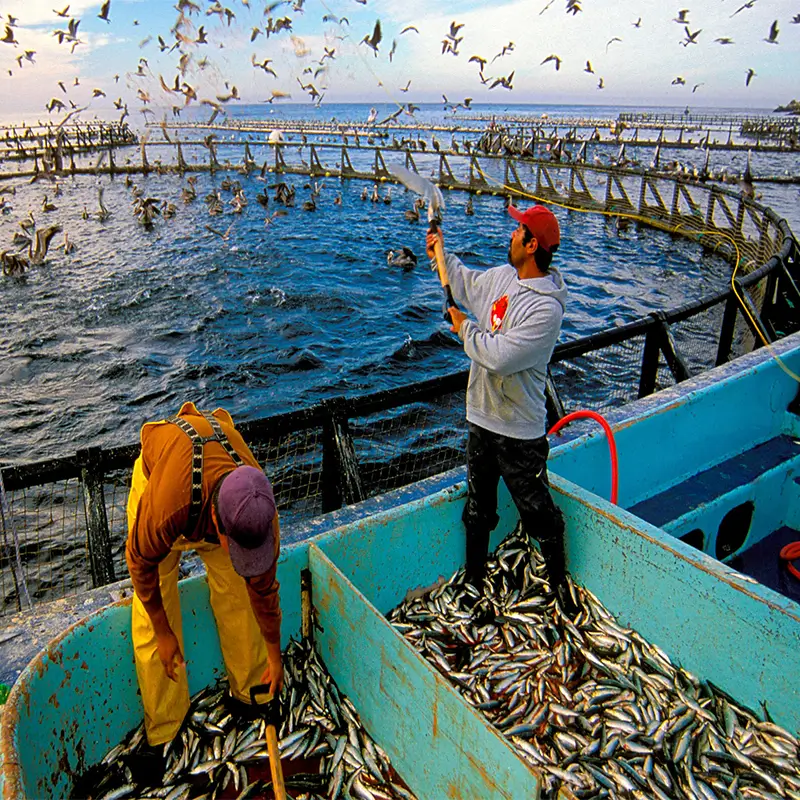
Cage Fish Farming: A New Opportunity for Sustainable Development and Profitability
In today’s world, where the need for sustainable and healthy food production is more pressing than ever, aquaculture has emerged as a crucial component of the global food supply chain. Cage fish farming, as one of the most advanced fish production methods, optimally utilizes natural water resources and enables large-scale, high-quality fish production in open environments such as seas, lakes, reservoirs, and rivers. This method, using durable cages designed to maintain natural water flow, provides ideal conditions for fish growth while significantly reducing construction and maintenance costs.
As modern technologies in this field are rapidly expanding, investing in cage fish farming can offer numerous economic opportunities. This article provides a comprehensive review of cage fish farming, its evolution, advantages, investment opportunities, applied technologies, and effective management strategies. Due to its numerous benefits, this system has attracted the attention of investors and aquaculture experts and is recognized as an innovative solution for ensuring food security and fostering sustainable economic growth.
Cage farming has gained popularity as a cost-effective and efficient system due to its reduced need for heavy infrastructure and its ability to utilize natural water bodies. In this method, cages made from materials such as polyethylene, durable nets, and galvanized metals are installed in various aquatic locations, benefiting from the natural water flow. This approach not only reduces energy and labor costs but also enhances productivity and improves the final product’s quality.
Modern cage fish farming systems incorporate advanced monitoring and management technologies, utilizing digital tools and smart sensors to track environmental conditions such as temperature, oxygen levels, and water quality in real-time. Consequently, investing in this sector presents a profitable and secure opportunity. Moreover, the rising global demand for farmed fish in both domestic and international markets provides a solid foundation for the expansion and development of this industry.
Given the growing demand for high-quality and healthy protein sources, adopting innovative fish farming methods has become a key component of agricultural development programs. These systems not only reduce pressure on natural resources but also leverage advanced technologies to create optimal conditions for fish growth.
The use of cage farming in open waters allows producers to engage in large-scale fish production without requiring massive infrastructure investments, significantly reducing production costs. Additionally, utilizing natural water bodies results in superior-quality seafood with enhanced taste, which positively influences consumer markets.
One of the outstanding features of cage fish farming is its flexibility and adaptability to various environmental conditions. The system is designed to function efficiently in diverse climates and geographical regions. Since cages facilitate access to open water resources, producers can easily identify new optimal locations for fish farming and invest accordingly. This not only boosts production levels but also diversifies products and strengthens export markets.
The History and Evolution of Cage Fish Farming
Traditional fish farming methods, such as earthen and concrete ponds, have been utilized for centuries. However, with the increasing need for higher efficiency and lower production costs, attention has shifted toward modern fish farming techniques. One such innovation is cage fish farming, which integrates cutting-edge technology and modern equipment to establish a prominent position in the aquaculture industry. In recent years, researchers and industry specialists have focused on refining cage designs to create optimal conditions for fish growth and reproduction. The use of lightweight and durable materials, innovative water flow designs, and advanced automation systems are among the key advancements in this field.
In the past few decades, scientific research and practical experiences in aquaculture have gradually replaced traditional methods with state-of-the-art technologies. Early fish farming models, which relied on artificial ponds and small basins, have now evolved into the use of modern cages installed in natural environments. This transition has been significant not only in terms of technology but also economically, allowing producers to improve their efficiency through advanced technological integration.
Key developments in cage design and construction, including the adoption of lightweight and resilient materials, lower installation costs, and increased structural durability, have been recognized as milestones in the history of cage fish farming. Today, despite climatic challenges and environmental changes, fish farming systems have adapted to various conditions, leading to a remarkable increase in successful projects. Scientists and engineers continue to enhance designs and optimize resource utilization to propel this industry to new heights.
Advantages and Investment Opportunities in Cage Farming Systems
One of the main reasons why cage fish farming is considered an attractive investment opportunity is its economic benefits and high efficiency. The use of cage systems allows investors to enter the market with lower risk and achieve high profitability by utilizing modern technologies. Additionally, precise management and monitoring of the farming process help minimize human errors and improve product quality.
From an economic perspective, the reduction in infrastructure costs is one of the most significant advantages of using cage farming systems. Installing these cages in natural water bodies instead of constructing expensive ponds results in substantial savings in initial investment. Moreover, the ability to cultivate a large number of fish in a confined space while optimizing water resources significantly increases production. This, along with improved product quality, elevates the economic efficiency of cage farming systems.
Beyond economic advantages, cage farming systems also create numerous job opportunities and contribute to the development of related industries. These systems require specialized labor, advanced equipment, and technical services, providing diverse avenues for the growth of auxiliary industries. Ultimately, this contributes to economic improvement and increased revenue generation. Consequently, both domestic and international investors have shown great interest in this sector, leading to the implementation of large-scale projects at regional and global levels.
Innovative Technologies in Cage Farming Systems
A key factor in the success of cage fish farming is the implementation of advanced technologies for system management and monitoring. Technologies such as precision sensors, data management software, and automation systems play a crucial role in increasing efficiency and reducing operational costs. These technologies provide real-time data on environmental conditions and system performance, enabling managers to make optimal decisions quickly and prevent potential issues.
In addition to automation systems, cutting-edge technologies like the Internet of Things (IoT) and artificial intelligence (AI) have been integrated to enhance environmental data prediction and analysis. These systems utilize complex algorithms to detect sudden changes in water conditions and automatically adjust necessary processes to maintain water quality and improve fish growth. The adoption of such technologies not only boosts productivity but also paves the way for the development of smart and autonomous systems across the broader agricultural industry.
Another major innovation in this field is the use of advanced software for data management and system performance analysis. These applications collect and analyze data related to water quality, fish growth, and other environmental parameters, providing managers with accurate insights for strategic decision-making. These data-driven approaches enable cage farming systems to operate efficiently under changing environmental conditions. The continued development of these technologies will play a crucial role in transforming the aquaculture industry, allowing investors to maximize profitability while minimizing costs.
Efficient Management and Operation of Cage Farming Systems
Effective management and optimal operation of cage fish farming systems are essential for success in this industry. Implementing comprehensive management programs and modern monitoring systems enables managers to precisely control all aspects of the farming process. Establishing a structured organization that includes technical teams, nutrition experts, and operational managers can significantly enhance the performance of farming systems. The integration of advanced technologies in management and monitoring ensures access to accurate and timely data, ultimately leading to increased efficiency and reduced production costs.
One of the most critical management practices is designing precise feeding programs tailored to the specific needs of each fish species. Properly planned feeding schedules not only accelerate fish growth but also prevent issues such as excessive waste and reduced product quality. Additionally, continuous monitoring of water quality and the use of advanced filtration systems create optimal conditions for fish growth and reproduction. Developing an integrated management system that allows for continuous tracking of all production stages is essential for the successful operation of cage farming systems.
Regular training programs for employees and updating their technical knowledge are also vital factors in improving the performance of farming systems. By learning from past experiences and leveraging expert consultations, managers can implement innovative solutions to enhance production processes. Furthermore, establishing communication networks among aquaculture specialists promotes knowledge exchange and fosters sustainable growth in the industry. These management strategies, combined with advanced technologies, pave the way for achieving high levels of productivity and profitability.

Economic Outlook and Future of Cage Fish Farming Industry
With significant changes in global markets and increasing consumer demand for high-quality seafood, the economic outlook for the cage fish farming industry is highly promising. The rapid growth of this industry has drawn attention from countries and investors, recognizing it as a key sector in ensuring food security and economic development. The advancement of modern technologies and the efficient utilization of water resources have paved the way for increased production and reduced operational costs, ultimately leading to high profitability.
In the coming decades, the cage fish farming industry is expected to experience substantial growth, capturing a significant share of both domestic and international markets. The industry’s growth trends indicate that with smart investments and leveraging successful experiences, rapid and continuous development can be achieved. Additionally, as consumer awareness of the nutritional value and health benefits of seafood increases, export markets are likely to expand. As a result, investing in this sector presents a sustainable and reliable economic opportunity, contributing not only to national income growth but also to job creation and the expansion of related industries.
Recent research highlights that the integration of modern technologies into the aquaculture industry can significantly enhance productivity while reducing production costs. This trend, combined with rising consumer demand, creates a dynamic and competitive market. Investment in cage fish farming systems has emerged as a strategic area for economic growth in various countries. The rapid expansion of this industry has the potential to establish new supply chains, boost exports, and improve the overall quality of life in many communities.
Vastra Holding’s Role in Investment and Project Development
Vastra Holding, a leading investment firm specializing in agriculture and food security, is at the forefront of utilizing modern technologies in the aquaculture industry. By identifying existing opportunities and leveraging international expertise, Vastra has actively invested in cage fish farming projects. With the goal of creating economic value and strengthening the food supply chain, the company integrates technological innovations and modern management models into these projects. Advanced monitoring systems, optimized production processes, and cost-effective operations are key attributes of Vastra’s investment approach.
Given the increasing market demand for high-quality seafood, Vastra’s role in supporting cage fish farming projects is of paramount importance. Through strategic partnerships with research institutions and technology providers, the company facilitates the sustainable development of this industry. Vastra’s investments not only enhance production levels and product quality but also generate extensive employment opportunities across multiple sectors. By drawing on successful international experiences and implementing innovative management models, Vastra has established itself as a benchmark for successful investment in aquaculture.
Vastra’s supported cage fish farming projects prioritize the use of cutting-edge technologies and continuous improvements in production processes. This innovative approach has enabled farming systems to achieve high efficiency and low operational costs, allowing them to compete both nationally and internationally. By investing in this sector, Vastra plays a crucial role in fostering a dynamic and competitive market that can serve as a model for success in other agricultural and food production sectors. Additionally, the creation of integrated supply chains and the adoption of intelligent management systems have optimized resource utilization and significantly increased project profitability.
Furthermore, Vastra’s strategic collaborations with universities, research centers, and technology firms facilitate the transfer of knowledge and innovative practices into cage fish farming projects. These interactions not only enhance the scientific and technical aspects of the projects but also drive continuous innovation, enabling the rapid improvement of farming methods. By adopting modern approaches and investing in advanced technologies, Vastra is committed to revolutionizing the aquaculture industry and contributing to long-term food security.