
Marine Cage Climate Insurance; Blue Economy
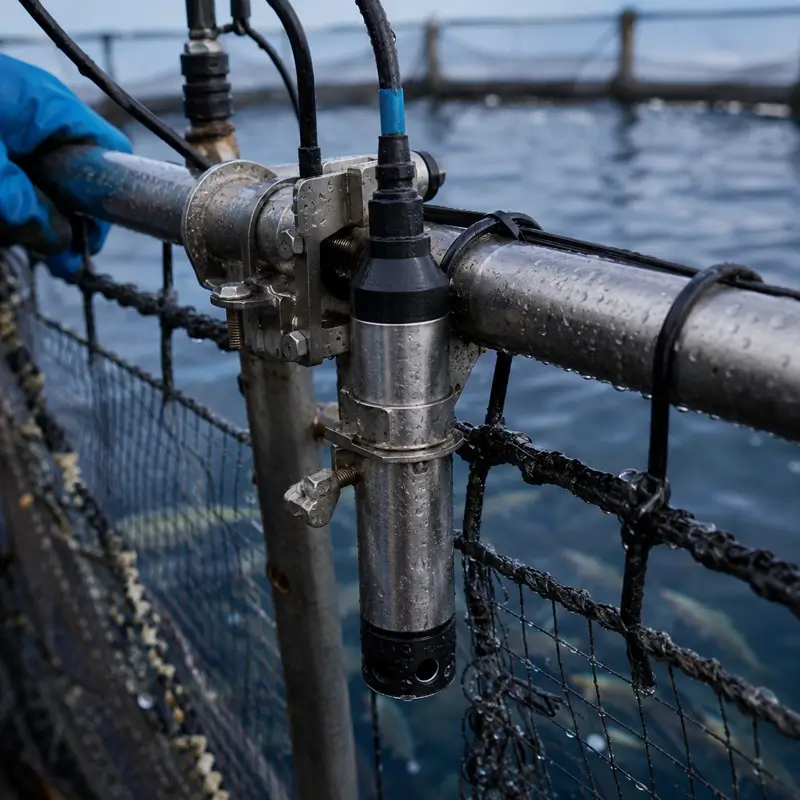
Climate Insurance for Sea Cages to Manage Risk in the Blue Economy
At first glance, a sea cage is a food production unit set in open water. From an investment perspective, however, it brings together a set of interconnected risks. Fish are farmed in an environment where water temperature, oxygen levels, wave height, and current intensity are not under the operator’s control. This reality makes the economics of sea cages different from land-based farming. When a climate event exceeds the biological tolerance of the fish, the damage is not limited to lower production. It can also affect consumed feed, biomass, infrastructure, loan repayment, and investor confidence.
The importance of this issue has grown as aquaculture has taken on a larger role in global food security. The FAO report on the state of world fisheries and aquaculture shows that global fisheries and aquaculture production reached 223.2 million tons in 2022, including 185.4 million tons of aquatic animals and 37.8 million tons of algae. In the same year, aquatic animal aquaculture reached 94.4 million tons, surpassing capture fisheries for the first time. This shift is not merely a production statistic. It shows that global food security now depends more than ever on systems that must be insurable and financeable in the face of climate stress.
In the blue economy, climate insurance for sea cages should not be limited to covering losses after an incident. This type of insurance has real value only when it brings environmental data, technical standards, biological monitoring, and financial instruments into a single framework. Marine heatwaves, storms, and oxygen depletion each create damage through different pathways, but on an actual farm they often operate in combination. Higher temperatures can increase the fish’s oxygen demand, weak currents can limit cage ventilation, net fouling can reduce water exchange, and algal events can intensify biological harm.
Why Does Climate Insurance for Sea Cages Depend on Oceanographic Data?
The starting point for climate insurance is the precise definition of risk. In climate sources, a marine heatwave is described as an extreme increase in ocean temperature over a sustained period. For sea cages, it becomes relevant to insurance when it is connected to the farmed species, the region, cage depth, and the fish’s biological thresholds. Copernicus Marine data show that sea surface temperature has increased by a global average of 0.5 ± 0.04 degrees Celsius since 1982. This trend is important for explaining thermal pressure on marine aquaculture, but insurance pricing cannot rely on a global average alone and requires local calibration.
In salmon cage risk modeling, very high water temperatures above 21 to 22 degrees Celsius and hypoxia below 60 to 70 percent oxygen saturation have been reported as examples of direct risk factors. These thresholds should not be generalized to all species and all seas, but they clarify the logic of insurance design. To understand loss, the insurer must know at what temperature the fish begin to deviate from normal feeding, at what oxygen level they enter stress, and how the combination of temperature and oxygen affects mortality. In this sense, a sea cage is not merely a physical asset. It is an uncontrollable habitat with monitorable boundaries.
– Thermal and Oxygen Indicators in Insurance Coverage Design
Satellite data and global models are essential for building the baseline risk layer, but in sea cages the distance between the water surface and the fish’s actual habitat can be decisive. The Copernicus global biogeochemical forecast product provides dissolved oxygen, chlorophyll, nitrate, phosphate, silicate, dissolved iron, primary production, pH, and surface pCO2 at a horizontal resolution of 0.25 degrees and across 50 vertical levels. This capability is important for identifying areas prone to oxygen depletion or algal blooms. However, insurance payouts become more accurate when such data are matched with in-cage sensors and daily farm records.
Modeling Storms and Waves to Reduce the Risk of Net Failure and Fish Escape
For a sea cage, a storm is not only a weather event. It is a test of structural design, net quality, mooring systems, service vessel operations, and crisis management capacity. According to the NOAA NDBC definition, significant wave height is the average height of the highest one-third of waves during a 20-minute sampling period. This indicator is important for cage design, limits on marine operations, estimating the risk of net failure, and activating index-based payouts. Wind speed and current speed must also be read alongside wave height, because the load placed on the cage and the quality of water ventilation depend on the combination of these variables.
The risk of fish escape during severe events links the farm’s financial loss to environmental consequences. The European Prevent Escape project recorded 255 escape events in 6 countries between 2007 and 2009, involving 9.2 million escaped fish. This figure shows that if insurance design considers only the value of lost biomass, it removes part of the problem from view. Fish escape can have environmental and genetic effects on wild populations, which makes the connection between insurance, technical standards, inspection, and licensing essential for sea cages.
– Norway’s Experience in Turning Technical Standards into a Condition for Insurability
Norway is an important example of linking engineering standards to reduced operational risk in sea cages. The NS 9415 standard sets requirements for site surveys, design, execution, and use of floating aquaculture farms with the aim of preventing fish escape. The NYTEK23 regulations were also developed for the technical requirements of aquaculture facilities in seas, lakes, and waterways, and in connection with NS 9415:2021 they help prevent fish escape. The Prevent Escape project report showed that after the implementation of the technical standard, salmon escapes fell from more than 600,000 fish per year during 2001 to 2006 to fewer than 300,000 fish per year during 2007 to 2011.
The main lesson of this experience for climate insurance is that a financial model cannot remain sustainable without engineering discipline. An insurer can price storm, wave, and structural failure risks more effectively when the site has been assessed, equipment has been installed according to defined standards, and technical inspections are not limited to the time of an incident. In such a framework, insurance does not replace risk management. Instead, it pushes the operator closer to net maintenance, data recording, density control, and compliance with standards. For countries planning to expand sea cage farming, this connection is a condition for the formation of a healthy insurance market.
Oxygen Depletion and Algal Blooms in the Loss Economics of Sea Cages
Oxygen depletion in sea cages often does not occur in isolation and is usually intensified by several simultaneous drivers. High temperatures increase the fish’s oxygen demand, high biomass density makes oxygen consumption heavier, weak currents reduce the cage’s natural ventilation, and net fouling can limit water exchange. Specialized aquaculture sources discuss measures such as regular net cleaning, removal of mortalities, appropriate site selection, relocation when algal blooms are identified, and aeration or oxygenation to manage this risk. Insurance that does not recognize this chain in the contract covers only the end point of the incident and remains detached from prevention.
Chile’s 2016 algal bloom crisis showed that biological risk in sea cages can turn into a large-scale economic event. During that crisis, more than 24 million salmon, equivalent to 38,300 tons, died at farming centers in Seno de Reloncaví and northern Chiloé. The importance of this case is not limited to the number of mortalities. It lies in the nature of the risk. If climate coverage for sea cages is based only on storms and structural failure, it leaves part of the losses related to oxygen, chlorophyll, water temperature, and algal events outside the insurance architecture.
– Philip Scrase, Carnegie Analyst: “This winter has been almost a perfect storm for the industry in terms of difficult farming conditions.”
The analytical value of the quote above comes from the combination of several factors, not from the description of a single incident. The salmon industry becomes vulnerable to events that simultaneously pressure temperature, oxygen, disease, operations, and production forecasts. For the insurer, this means that correlations among risks must be modeled. If marine heatwaves, oxygen depletion, and operational constraints during storms are calculated separately, the probability of underestimating cumulative losses and post-incident liquidity needs increases.
Blue Finance and the Role of Insurance in the Investment Economics of Sea Cages
From a financial standpoint, sea cages are sensitive to initial investment, working capital, and the production cycle. Feed has a particularly important place in this economy, because Mowi’s Handbook 2025 identifies feed as the largest share of total salmon production costs and links cost differences among countries to feed inputs, logistics, and feed conversion ratios. In the Precision Fish Farming literature, feed costs are also reported to account for around 50 percent of total production costs from egg to market-size fish. Therefore, a climate event threatens not only biomass, but also part of the cost that has already been paid before the final sale.
This is why Blue Finance frameworks matter for marine aquaculture. The IFC Guidelines for Blue Finance, version 2.0, are designed to identify, structure, and scale investments that support the sustainable use of water and ocean resources. World Bank documents on Blue Finance also emphasize that a sustainable blue economy needs financial instruments to mobilize capital, reduce risk, and measure impact. Climate insurance, in this context, is not a standalone layer. It must sit alongside environmental standards, data monitoring, project validation, and financing agreements.
Financial design for sea cages becomes more reliable when the roles of the government, banks, private investors, and operators are clearly separated. The government can make initial entry into the insurance market possible through targeted premium subsidies and standard-setting. Banks can link collateral acceptance and repayment schedules to the existence of insurance coverage and monitoring systems. Private investors also move closer to capacity expansion when the project’s physical and biological risks have been translated into observable indicators, insurance contracts, and operational requirements.
Iran’s Legal Framework for Localizing Climate Insurance for Sea Cages
In Iran, the legal basis for entering aquaculture insurance can be found in the Agricultural Insurance Law. The 1387 amended single article places farmed aquatic animals within the coverage scope of the Agricultural Insurance Fund and brings losses caused by natural disasters and force majeure events into this area alongside agricultural products, livestock, and poultry. The same law also provides for government support for part of farmers’ insurance premiums and compensation for possible losses from insurance operations in the national budget. This legal foundation is not sufficient for developing more precise instruments, but it creates a meaningful starting point for connecting public policy, insurance, and marine aquaculture.
The Law on the Protection and Exploitation of Aquatic Resources is also important for localizing insurance, because it permits the breeding and farming of aquatic animals through licensing by the Fisheries Organization and, under Article 18, restricts the issuance of licenses in cases where aquatic resources may be harmed. This legal logic shows that insurance should not be designed separately from licensing and environmental assessment. If a sea cage causes serious negative impacts on coral reefs, shallow ecosystems, or aquatic resources, production loss insurance alone is not an adequate response. A study on cage farming in the Persian Gulf has also warned about the possible effects of cage farms on coral reefs and shallow ecosystems along Iran’s coast.
– Global Open Data and Local Sensors on Iran’s Implementation Path
Iran’s implementation path should begin with a combination of global open data and farm-level monitoring. Copernicus data on sea surface temperature, oxygen, chlorophyll, and currents can provide the baseline layer for risk assessment, but the insurance index for sea cages must be verified with local sensors at depths relevant to the fish habitat. Surface temperature, subsurface temperature, dissolved oxygen, wave height, wind speed, current speed, biomass density, daily mortality, feed consumption, and operational events should be recorded in an auditable data log. Such a system makes it possible to distinguish climate-related losses from poor maintenance, feeding errors, or structural problems.
Iran’s historical aquaculture experience also shows that growth capacity is not enough without an adequate risk management system. In its fisheries profile for Iran, the FAO reported that the country’s aquaculture production increased from 27,000 tons in 1990 to 320,200 tons in 2014, accounting for around 34 percent of total fisheries production. This data is not sufficient for assessing the current situation, but it does show the long-term trajectory of aquaculture’s growing role. If sea cages are to grow along this path, climate insurance must be integrated into project design from the outset, together with site selection, structural standards, environmental monitoring, and financial assessment.
A Decision-Making Roadmap for Sea Cage Insurability in Iran
The insurability of a sea cage does not begin with the purchase of an insurance policy. It takes shape through the definition of the asset, the risk, the index, and managerial responsibility. The operator must record biomass, species, density, fish age, feeding plan, net specifications, cleaning history, site location, and environmental data in a way that is reviewable by the insurer and the regulator. The insurer must also distinguish between losses caused by marine heatwaves, storms, or oxygen depletion and losses rooted in operational weakness. Without this boundary, the insurance contract becomes a source of dispute after the incident rather than a risk reduction tool.
For Iran, pilot design could begin with several selected zones and a limited number of licensed farms. In this pilot, Copernicus data and in-cage sensors, site selection standards, net maintenance checklists, daily mortality records, feed information, and wave and oxygen indicators would be placed alongside one another. In such a model, the government’s role is not broad and untargeted subsidy payments. It is to support the creation of data infrastructure and reduce the entry cost for disciplined operators seeking insurance coverage. The role of banks should also shift from simple financing to project risk assessment based on data, standards, and insurance.
The practical conclusion is that climate insurance for sea cages is not merely a financial product for compensating damage after an incident. If designed properly, this insurance creates a shared language among oceanography, fish biology, structural engineering, environmental law, and Blue Finance. Marine heatwaves, storms, and oxygen depletion each have their own indicators, but investment decisions depend on their combination. Iran’s sea cages can become more attractive assets for investors, banks, and policymakers only when insurance is designed together with technical standards, continuous monitoring, and environmental responsibility.
