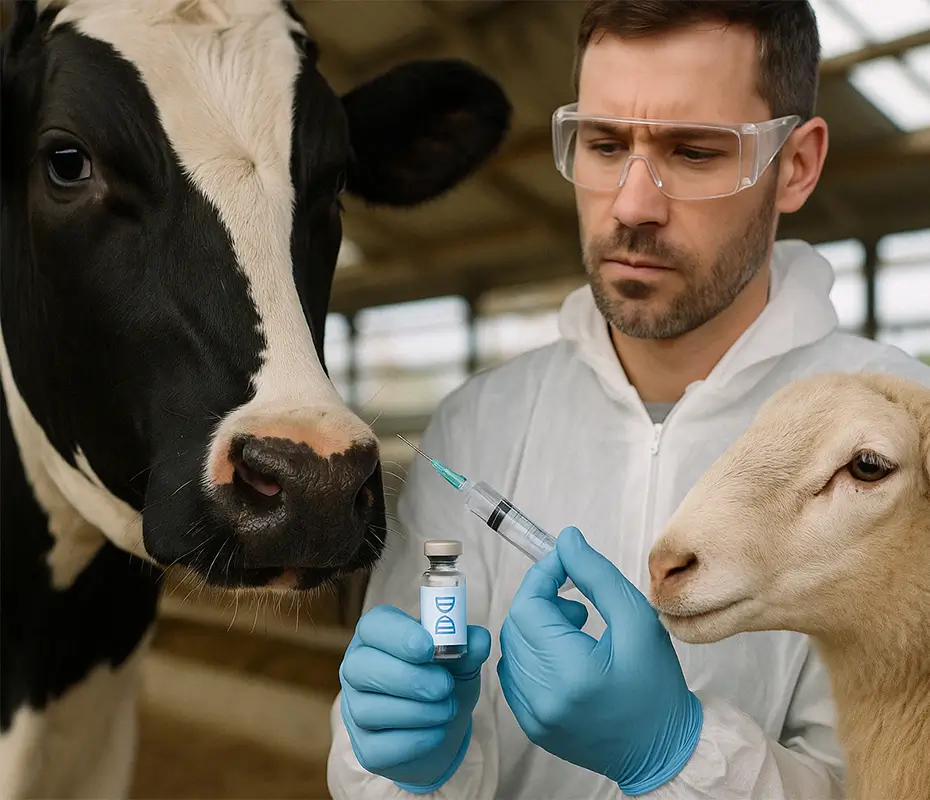
Enhancing Ruminant Resilience Through Viral Gene Therapy
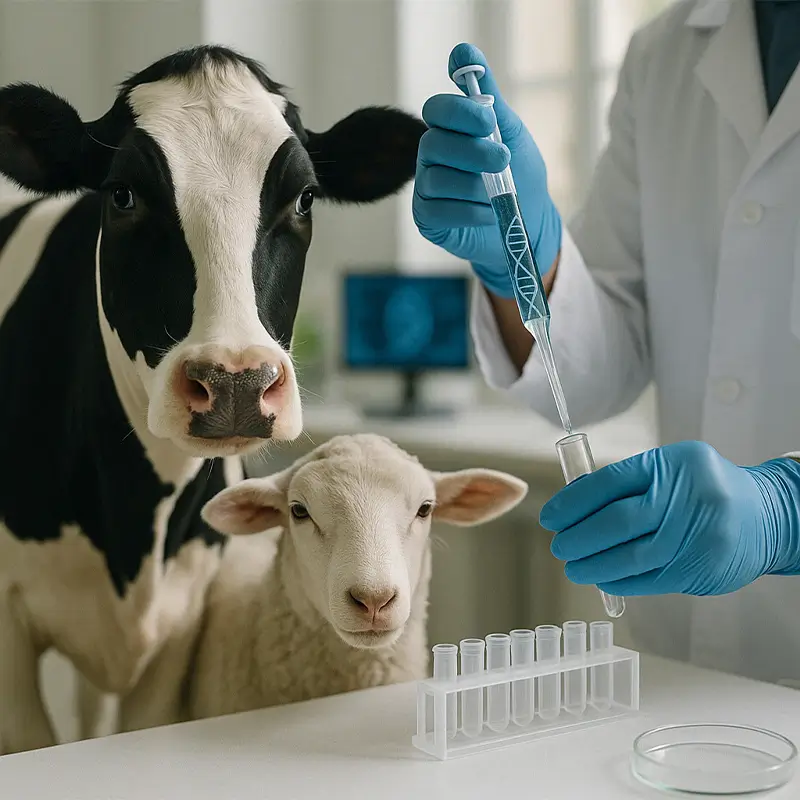
Enhancing Immunity and Increasing Resistance in Ruminants Against Viral Diseases Through Gene Therapy Technology
The growing global demand for animal-based food has placed livestock farming under increasing threat from contagious diseases. Ruminants are particularly vulnerable to viruses such as Peste des Petits Ruminants (PPR) and Bovine Viral Diarrhea (BVD). These diseases not only lead to high animal mortality rates but also cause significant economic losses. According to the Food and Agriculture Organization (FAO), PPR alone results in over $2 billion in economic damage annually and jeopardizes the livelihoods of more than 300 million rural households in vulnerable regions.
In recent years, advanced gene-editing technologies such as CRISPR/Cas9 have emerged as a revolutionary force in biotechnology. This method utilizes molecular tools to precisely cut and modify specific sections of DNA. By designing a guide RNA (gRNA) that matches a target sequence, it becomes possible to identify and edit genes involved in immune response or viral pathogenesis. Preclinical studies have shown that using CRISPR/Cas9 can reduce livestock susceptibility to disease by removing or altering viral receptors, while also boosting their immune defenses. Additionally, diagnostic tools based on this same technology have made it possible to detect viral infections rapidly and accurately.
– Eleanor Riley: “Gene editing technology is on the verge of revolutionizing animal husbandry by enhancing disease resistance and potentially saving livestock owners millions of dollars each year.”
Integrating gene therapy into breeding programs and farm management systems could significantly reduce the spread of viral diseases and improve herd health indicators. For this approach to succeed, collaboration between research institutes, universities, and the private sector is crucial to transition lab processes into mass production and eventual field application. At the same time, regulatory and ethical frameworks must be developed to ensure biosafety and public acceptance of this technology. Combining smart vaccination strategies, ongoing bioinformatic surveillance, and innovative financial solutions can lay the groundwork for a transformative shift in ruminant livestock farming.
Molecular Mechanisms of Gene Therapy in Enhancing Viral Resistance in Ruminants
– Editing Viral Receptors to Prevent Pathogen Entry
Viral entry into host cells is the first step of infection. Many major livestock viruses, such as Bovine Viral Diarrhea Virus (BVDV), utilize receptors like CD46, while certain coronaviruses rely on the angiotensin-converting enzyme 2 (ACE2) receptor. Using CRISPR/Cas9 technology, researchers can modify or remove these receptor binding sites to block the virus’s access. In a study conducted by the Perbira Institute, precise targeting of viral entry genes through guide RNA design led to a significant reduction in viral load within cultured cells.
Designing guide RNAs for specific sequences requires rigorous bioinformatic analysis to prevent unintended edits in non-target regions. Incorporating off-target prediction algorithms and using high-fidelity Cas9 variants have greatly minimized errors. This approach not only improves the safety profile of gene therapy but also enhances its scalability for livestock applications.
In large-scale farms with high ruminant populations, even a modest reduction in infection rates can help prevent widespread outbreaks and major economic losses. Upon seeing promising laboratory results, farmers can anticipate reduced antiviral drug use and improved animal welfare outcomes.
– Enhancing Immune Cell Response via MHC and NK Pathways
Genetic variation within the Major Histocompatibility Complex (MHC) plays a key role in pathogen recognition by T cells. Studies have shown that certain MHC class I alleles are associated with stronger immune responses compared to others. According to research published in *Immunogenetics*, accurate mapping and targeted editing of the MHC region can enhance livestock resistance to emerging viruses.
– John Hammond, Director of Research at Perbira Institute: “A deeper understanding of MHC genetic diversity can significantly improve disease resistance and vaccine efficacy.”
Natural Killer (NK) cells are a vital part of the innate immune system, with their receptors finely tuned to MHC molecules. Researchers have used CRISPR to edit NK receptor genes, thereby boosting the cytotoxic response of NK cells against infected targets. Combining MHC editing with NK pathway enhancement not only strengthens the initial immune response but also establishes lasting immunological memory for future challenges.
Applying these edits at the embryonic or germline level can provide future generations of livestock with innate protection against a broad spectrum of common viruses. This intergenerational strategy marks a new era in breeding resilient and sustainable herds for the livestock industry.
– Using Viral Vectors and HDR Systems to Introduce Protective Genes
Beyond cutting or deleting genetic sequences, adding resistance or immune-boosting genes into the livestock genome can enhance immune performance at a molecular level. Viral vectors such as AAV and lentivirus, due to their high gene transfer capacity and ability to infect non-dividing cells, are considered ideal tools for this purpose. Homology-directed repair (HDR) mechanisms enable the insertion of protective genes without disrupting existing gene functions.
In laboratory settings, HDR success rates are typically low and require optimization of factors like vector-to-DNA ratios and timing of vector delivery. Research at the Perbira Institute indicates that combining chemical enhancers with HDR-supporting proteins can double the efficiency of gene transfer. This advancement is paving the way for a new chapter in livestock gene therapy.
However, concerns remain regarding the safety, stability of gene expression, and risks of unintended mutations. Clear regulatory frameworks and stringent oversight during production and quality control will be crucial to gaining widespread acceptance of this technology in the livestock sector.
Preclinical and Field Results of Gene Therapy for Enhancing Viral Resistance in Ruminants
– In Vitro Trials on Sheep and Cattle Cells
In preclinical studies evaluating the effectiveness of CRISPR/Cas9 in reducing susceptibility to Bovine Viral Diarrhea Virus (BVDV), researchers targeted the virus’s binding site on the CD46 receptor and edited calf fibroblast cells. Results showed that the viral load in modified cells was reduced by over 95%, with no significant disruption in the expression of key host immune genes. This level of viral suppression highlights the future potential of this technology for controlling infections in large herds.
– Birth of the First BVDV-Resistant Calf in Field Studies
In a collaborative project between the USDA Agricultural Research Service and the universities of Nebraska and Kentucky, CRISPR was used to edit the CD46 gene in bovine embryos. The resulting calf, named “Jinger,” was born on July 19, 2021, and underwent a viral challenge test. When Jinger was housed for a week alongside an infected, virus-shedding calf, no signs of infection were observed. Health indicators such as appetite, weight gain, and blood parameters remained within normal ranges.
A comprehensive review of scientific literature indicates that gene-editing technologies have also shown promising results in lab trials involving goats and antelopes. In many of these studies, precise edits to immune-response genes and cell signaling pathways have led to a twofold increase in antiviral antibody levels. These controlled-environment studies underscore the potential to apply these techniques in commercial farm settings.
– Evaluating Production and Economic Metrics After Genomic Editing
One of the main concerns for livestock producers is whether genetic modifications may negatively impact animal productivity. Preliminary data from first-generation calves and lambs edited with CRISPR show that average daily gain (ADG) and milk yield remained stable, with some cases showing improvements of up to 10%. Reduced treatment and quarantine costs, especially in managing viral outbreaks, can significantly boost operational profitability and accelerate return on investment in gene therapy initiatives.
– Alison Van Eenennaam: “CRISPR technology has the potential to produce disease-resistant livestock. Currently, about 20% of animals in the livestock industry are lost to disease each year—gene therapy could dramatically reduce that loss.”
Ethical, Legal, and Biosafety Challenges in the Application of Gene Therapy in Ruminants
Genetic modifications in livestock raise serious concerns regarding animal rights, welfare, and potential intergenerational consequences. Critics argue that manipulating the genome of living organisms may unintentionally cause suffering or lead to behavioral and physiological abnormalities. Studies have reported that CRISPR-based genetic editing in livestock has, in some cases, resulted in high rates of miscarriage, malformations, and embryonic defects—intensifying the ethical scrutiny surrounding the technology.
At the same time, civil advocacy groups and organizations like GeneWatch UK warn that weakening regulatory oversight could jeopardize animal welfare, environmental integrity, and consumer rights. These groups argue that equating gene therapy with traditional breeding methods is a misconception and call for thorough, up-to-date assessments before implementation.
– Jennifer Doudna: “I’m optimistic about CRISPR’s impact on genetic diseases and sustainable agriculture, but I worry that without cautious and responsible development, its benefits might never reach those who need them most.”
– Regulatory Frameworks in the European Union and the United States
In the European Union, all gene-edited organisms are evaluated under GMO regulations. The European Food Safety Authority (EFSA) has outlined a four-step process: hazard identification, hazard characterization, exposure assessment, and risk evaluation for gene-edited products. Recently, EFSA released a new draft aimed at strengthening animal welfare and environmental sustainability criteria, which is currently under public consultation until March 2025.
In the United States, the USDA and FDA follow a “product-based” approach, meaning only gene-edited products that demonstrate potential risk during testing are subjected to stringent oversight. While this policy accelerates market entry for certain genetically edited animals, it has also drawn criticism over transparency and limited public involvement in the decision-making process.
– Biosafety Requirements and Unintended Consequences in Livestock Populations
Applying gene therapy at scale in commercial farms requires strict biosafety measures to prevent unintended or uncontrolled transfer of edited genes to wild or unintended populations. Past experiences have shown that gene edits can spread through sperm or eggs, potentially altering biodiversity if not carefully contained.
Ecological modeling studies predict that widespread resistance gene infiltration in livestock could, over time, affect food chain dynamics and microbial ecosystems. Therefore, ongoing molecular surveillance and genetic stability monitoring programs are essential to detect and address unforeseen changes before they escalate.
Additionally, the risk of off-target mutations—unintended genetic edits—must be meticulously monitored. While high-fidelity Cas9 variants and predictive algorithms can significantly reduce these risks, eliminating them entirely remains a technical and biological challenge.
Strategic Outlook for the Development and Application of Gene Therapy in Ruminant Livestock
To enable the widespread adoption of gene therapy in livestock farming, it is essential to develop supportive policies that span from fundamental research to practical application. Establishing joint research funds among governments, universities, and the private sector can strengthen the capacity of reference laboratories and accelerate preclinical phases. Furthermore, setting quality standards for edited cell lines and gene delivery methods will facilitate faster market acceptance globally. According to an EFSA report, clearly defined safety and environmental assessment criteria can expedite the approval process and reduce legal uncertainties.
– Building the Value Chain and Mass Production Infrastructure
Following confirmation of gene therapy’s safety and efficacy in field studies, there is a pressing need to develop biogenetic production infrastructure and specialized distribution systems for gene-based vaccines. Establishing dedicated cell culture facilities and bioreactors, alongside molecular monitoring labs for off-target analysis, is crucial. Collaboration with biotech firms and vaccine suppliers can streamline the transition from lab to farm while reducing production costs.
– Jennifer Doudna: “To truly realize the benefits of CRISPR in livestock, we must invest in distribution infrastructure and farmer training—ensuring the technology reaches those who stand to benefit most.”
Widespread adoption of gene therapy among farmers and consumers will require comprehensive education initiatives. Hosting hands-on workshops in livestock regions and providing user-friendly guides can increase awareness and trust in the technology. A marketing study found that 75% of farmers showed greater interest in gene-edited livestock after reviewing scientific evidence of success in preclinical studies. Providing real-world evidence and technical support can boost adoption rates by up to 30%.
– Economic Evaluation and Sustainable Business Models
Cost-benefit analyses of gene therapy in livestock farming indicate that savings on medical and quarantine expenses, combined with increased milk and meat productivity, can yield a return on investment within two years. Collaborative business models involving farmer cooperatives and agricultural financial institutions can provide initial funding and help share investment risk. The FAO has emphasized the importance of integrating modern financial services with biotechnology to improve access to microcredit for farmers.
– John Hammond, Director of Research at the Perbira Institute: “Combining genome editing with effective financial models could spark real economic transformation in rural communities and shield farmers from market volatility.”
– The Path Ahead: Future Research and Innovation
Looking ahead, combining emerging technologies such as base editing, artificial intelligence for epidemiological forecasting, and blockchain for genetic data tracking could trigger a new revolution in livestock farming. Advances in polyvalent vaccine development and the use of hybrid vectors may offer broader viral protection. Additionally, the rise of non-invasive techniques and gene delivery via smart nanodevices will make the experience easier and more cost-effective for farmers.
By aligning technological foresight, stakeholder collaboration, and strong policy support, the future of livestock farming can move toward sustainable meat and dairy production with minimal loss and maximum efficiency. Gene therapy in ruminants marks a pivotal moment for an industry striving for global food security and long-term economic sustainability.