Soil Health Index: NIR, Metabarcoding, SOC MRV
Soil Health Indexing with Near-Infrared Spectroscopy and Metabarcoding
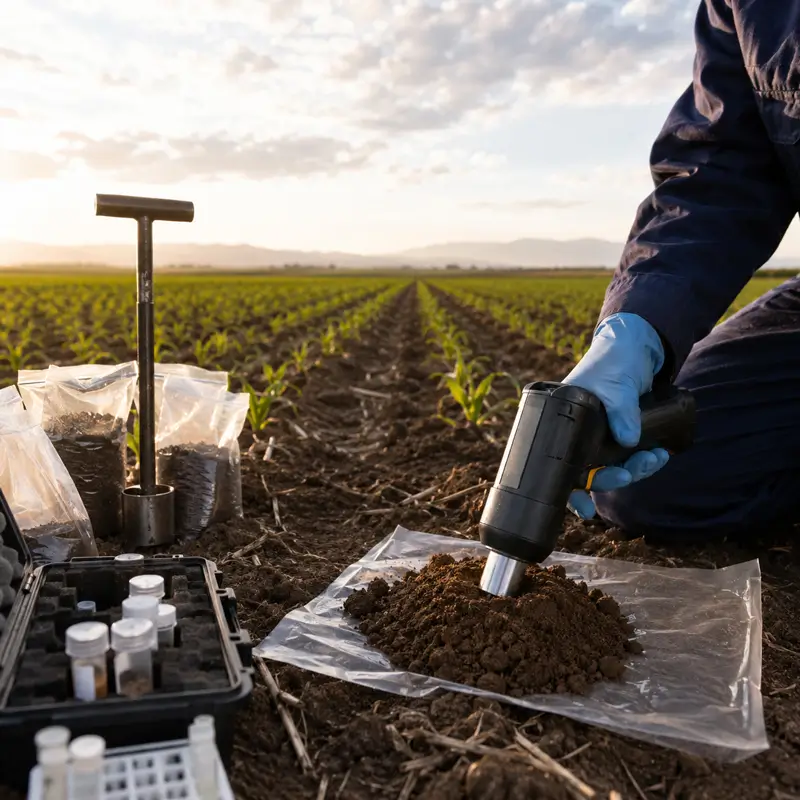
Healthy soil is not merely a medium that holds roots in place; it is a living system that simultaneously contains organic matter, water, air, microorganisms, nutrients, and farm management history. When soil health is assessed only through nutrient testing, a large part of the reality remains hidden. A soil may be acceptable in terms of available nitrogen or phosphorus, yet fragile in terms of organic carbon, salinity, pH, biological activity, or microbial diversity. The official definition of soil health in NRCS literature also emphasizes the soil’s capacity to function as a living ecosystem. Therefore, its assessment must move beyond limited testing and also account for the soil’s biological and carbon-related functions.
In newer systems, a soil health index should be built simultaneously from visible and near-infrared spectroscopy data, soil organic carbon, pH, electrical conductivity, moisture, biological activity, soil DNA, and farm management history. This multidimensional combination describes soil not as a table of nutrient deficiencies, but as a biological, physical, chemical, and carbon-based unit. The value of such a model lies in its ability to bridge two seemingly different decisions: on one side, prescribing biological inputs for the farm, and on the other, measuring, reporting, and verifying soil organic carbon. From this perspective, a biological input is recommended only when the soil is biologically, chemically, and carbon-wise ready to respond.
Climate and economic pressures have also moved this issue from the level of academic research to the level of investment infrastructure. In its report on the global status of salt-affected soils, the FAO stated that more than 1,381 million hectares, equivalent to 10.7 percent of the world’s land area, are affected by salinity or sodicity. At this scale, a soil health index that does not place EC alongside SOC, pH, and biological data will produce an incomplete picture for arid and semi-arid regions. On the other hand, soil carbon is no longer merely an indicator of fertility. When soil carbon removal credits enter long-term contracts, soil health is also translated into the language of markets, capital, and risk.
How Does the Soil Health Index Move from Nutrient Testing to a Multidimensional Model?
The logic of soil health indexing begins with a simple question: does the soil merely have a nutrient deficiency, or have its biological and carbon functions also changed? Metrics such as SOC concentration and SOC stock represent two different levels of understanding soil carbon. The first expresses the amount of organic carbon within the soil mass, while the second shows the carbon stock per unit of area and depth. For MRV, SOC stock is directly important because converting concentration into stock depends on bulk density, sampling depth, and the proportion of coarse fragments. This dependency itself shows that a soil health index must have a data-driven structure and that each metric must be interpreted within its proper methodological position.
pH and EC are two key metrics that often reveal their effects in the performance of biological inputs, not merely in a soil test report. LUCAS 2018 reported pH using two methods, CaCl2 and H2O, and this methodological difference is a reminder that integrating data without considering the measurement method can distort indexing. EC, as an operational measure of salinity, must also be placed alongside organic carbon and pH, because salinity can limit plant growth, microbial efficiency, and the response to biofertilizers or biostimulants. In a multidimensional index, each metric is not merely a data column; it is part of the decision-making logic for soil management.
– The Role of SOC and Bulk Density in Soil Carbon Credibility
Soil organic carbon is translated into the language of carbon markets when it moves from a laboratory metric to a reportable and verifiable indicator. Within the World Bank SOC MRV Sourcebook framework, the choice of measurement method must consider cost and feasibility as well as uncertainty. This perspective is important for soil health indexing because reducing uncertainty is not achieved only by increasing the number of tests. Sampling design, fixed sampling depth, bulk density measurement, and data quality control also play decisive roles. Therefore, SOC must function both as an indicator of fertility and as a metric for validating carbon changes over time.
Near-Infrared Spectroscopy and Spectral Libraries in Rapid Soil Monitoring
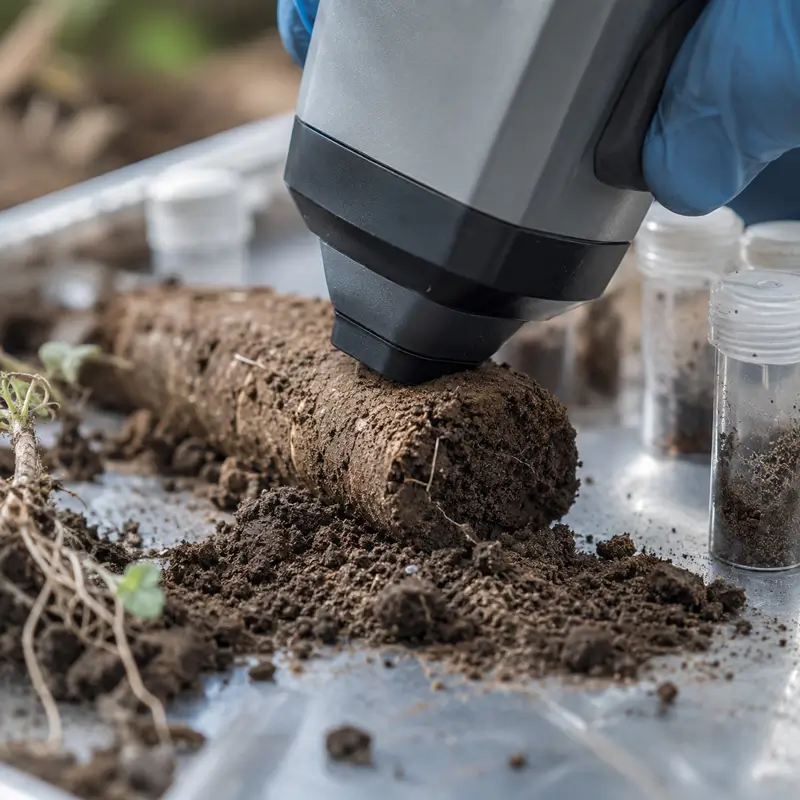
Near-infrared and visible spectroscopy analyzes soil reflectance across ranges such as 350 to 2500 nanometers or 400 to 2500 nanometers and, through chemometric or machine-learning models, helps predict properties such as SOC, texture, clay, carbonate, and pH. The main advantages of this technology are speed, scalability, and the ability to build spectral libraries. However, spectroscopy alone is not sufficient for MRV. Every spectral model must be calibrated against laboratory reference measurements so that optical reflectance can be converted into reliable soil science data. For this reason, the value of spectroscopy is not in fully replacing the laboratory, but in scaling up monitoring and reducing the cost of repeated measurements.
The LUCAS Soil experience shows that soil spectroscopy at the continental scale has moved beyond the proof-of-concept stage. In 2009, the program covered about 20,000 points, with sampling from 0 to 20 centimeters and approximately 0.5 kilograms of topsoil collected at each site, and the samples were sent to a central laboratory for physical and chemical analysis. Concentrating analysis in a central laboratory reduces inter-laboratory error and is important for building a valid spectral model. In 2018, LUCAS also provided data from 18,984 samples, including pH, organic carbon, CaCO3, nitrogen, phosphorus, potassium, EC, and extractable elements, for soil modeling and monitoring.
KSSL in the United States is another example of the importance of spectral data infrastructure. The FAO and GLOSOLAN page refers to VisNIR and MIR libraries with more than 100,000 samples, mostly from the United States, and this scale demonstrates the role of spectral libraries in transferring models from the laboratory to soil science networks. A spectral library has operational value when spectra, reference data, sample preparation methods, geographic location, and laboratory quality are stored together. Without this connection, a spectral model may have limited transferability across different soils or instruments.
– The Cost of Carbon Testing and the Role of NIR in Scaling Monitoring
Monitoring cost is one of the serious reasons for bringing NIR into soil health and carbon MRV. An educational source from World Agroforestry reported the laboratory cost of carbon measurement at $4.99 per sample for thermal oxidation and $2.19 per sample for NIR spectroscopy, concluding that laboratory costs were reduced by 56 percent. This figure covers only the laboratory cost and does not include field sampling, sample preparation, or verification, but its message is clear. At the network scale, NIR can increase the number of points that can be monitored, provided that reference calibration and quality control are maintained.
What Does Soil Metabarcoding Add to Biological Input Prescription?
The biological dimension of soil is precisely the part that is usually underrepresented in traditional input prescription. Soil metabarcoding, through the extraction of environmental DNA or soil DNA, the amplification of barcode regions such as 16S rRNA for bacteria and archaea and ITS for fungi, and then high-throughput sequencing, reveals the composition and richness of the microbial community. The 2012 version of ISO 11063 defined the direct extraction of DNA from soil samples for analyzing the structure and abundance of bacterial communities using PCR-based technologies, and it has since been replaced by the 2020 version. The practical message of this standard is that the biological layer of soil must enter the index through a clear protocol, contamination control, and cautious interpretation.
France’s experience with RMQS shows how the connection between soil monitoring and biological measurement can be designed at the national scale. This network covers 2,240 sites in a 16-kilometer by 16-kilometer grid, repeats sampling every 15 years, and simultaneously measures indicators such as bulk density, carbon, pH, available water, pollutants, and biodiversity metrics. In the study by Terrat and colleagues in PLOS ONE, 2,173 RMQS sites were used to assess bacterial richness through 16S rRNA sequencing and to examine its relationship with soil properties, climate, geomorphology, and land use. This experience shows that soil DNA has decision-making value when it is connected to environmental and management data.
However, metabarcoding should not be interpreted beyond its capacity. DNA data show presence or genetic traces, but on their own they are not equivalent to live activity, ecosystem function, or a definitive response to a biological input. ISO 11063 refers to limitations such as the persistence of plant residues even after two-millimeter sieving and the entry of plant DNA into the soil DNA extract. Such details are critical for interpreting metabarcoding data. Therefore, biological input prescription should place DNA data alongside pH, EC, SOC, moisture, biological activity, and management history, not treat it as an independent and definitive answer.
From Biological Input Prescription to Soil Organic Carbon MRV
Within this framework, biological input prescription means selecting or recommending a biostimulant, biofertilizer, microbial inoculant, or organic matter management strategy based on the actual condition of the soil. Regulation (EU) 2019/1009 defines the microbial plant biostimulant group under PFC 6(A) and CMC 7 and sets microbial safety limits for Salmonella spp. and Escherichia coli. This regulation has applied since July 16, 2022, for placing CE-marked fertilizer and biostimulant products on the EU market. Its operational implication for a soil health index is clear: a biological prescription must consider efficacy, safety, and compliance at the same time.
Soil organic carbon MRV is the other side of this same data architecture. The FAO GSOC MRV Protocol and the World Bank SOC MRV Sourcebook connect the measurement, reporting, and verification of SOC changes and greenhouse gas emissions or removals to sustainable soil management. Verra VM0042 v2.2 also defines the improved agricultural land management methodology for quantifying emission reductions and removals based on increased SOC and covers activities such as reduced tillage, improved fertilization, residue and water management, cover cropping, and grazing management. At this level, the soil health index becomes a document for farm-level decision-making, project reporting, and market trust.
– Erik Rylander, Chief Commercial Officer of Stockholm Exergi: “We are creating a stream of carbon from the atmosphere to the geosphere.”
This conceptual image is also understandable for soil carbon, with the difference that storage in soil depends on living and reversible farm management. SOC increase can be strengthened through residue management, reduced soil disturbance, cover cropping, or improved pasture grazing, but its durability remains dependent on continued management and verification. For this reason, field sampling, modeling, management data, and third-party verification must be connected. The more accurately a soil health index can separate real SOC change from measurement variation, the greater its potential to become a credible MRV report.
How Does the Soil Carbon Market Turn MRV Quality into a Condition for Investability?
Two recent contracts with Microsoft show that soil carbon has entered the language of long-term purchase agreements. On January 15, 2026, Indigo Carbon announced that Microsoft would purchase 2.85 million soil carbon removal credits over 12 years from the Carbon by Indigo program. Agoro Carbon also announced on June 24, 2025, a 12-year agreement with Microsoft to deliver 2.6 million carbon removal credits from U.S. cropland and rangeland projects, stating that the projects would be developed under the Verra VM0042 methodology. These figures do not show the price per ton or farm revenue, but they do show that SOC MRV is moving from a laboratory service toward a contract-ready infrastructure for the carbon removal market.
– Elliott Formal, CEO of Agoro Carbon: “This agreement with Microsoft is the strongest validation of our quality-driven, farmer-centered approach to soil carbon sequestration.”
In this market, data quality is as important as credit volume. In decision M45, ICVCM approved the VM0042 v2.2 methodology for the CCP label under specific conditions, and this decision shows that agricultural carbon credits are not accepted merely through claims of improved management. Field sampling, defensible modeling, uncertainty control, and third-party verification are risk-reduction tools for buyers and investors. If a project cannot establish a clear link between management change, SOC change, and credit quality, its liquidity declines in the eyes of demanding buyers.
– Amy Merrill, CEO of the Integrity Council for the Voluntary Carbon Market: “We don’t speculate on price; we want to bring a threshold of integrity into the market.”
This shift from price-centered thinking to integrity has a direct message for soil health indexing. An index that is merely cheap, but does not precisely manage sampling methodology, spectral calibration, DNA quality control, and the conversion of SOC concentration into SOC stock, will not create a reliable asset in the carbon market. The European Union’s CRCF, through Regulation (EU) 2024/3012, has also created a voluntary framework for certifying permanent carbon removals, carbon farming, and carbon storage in products. At the same time, the EU Soil Monitoring Law has been in force since December 16, 2025, placing threats such as erosion, loss of organic matter, salinity, pollution, compaction, sealing, and loss of soil biodiversity within a policy framework.
– Pedro Barata, Co-Chair of the ICVCM Expert Panel: “Companies can invest in high-quality carbon credits without fear of greenwashing accusations.”
Designing an Iranian Pilot for Soil Health and Organic Carbon Indexing
For Iran, the defensible path does not begin with a claim of nationwide implementation; it begins with a precise, limited, and verifiable pilot. Such a pilot should bring together globally standardized metrics such as SOC, SOC stock, pH, EC, bulk density, soil DNA, and farm management data across several selected soil-climate zones. In this design, EC is particularly important because the global threat of salinity has been highlighted in the FAO report, and arid and semi-arid regions are sensitive to salinity metrics. The cautious approach is for each pilot to first stabilize data quality and sampling methodology, and only then move toward input prescription or MRV reporting.
From the outset, the pilot design must distinguish among three outputs: a soil health index for farm management, biological input prescription to reduce input-use risk, and organic carbon MRV for reportability. For the first output, the combination of spectral data, pH, EC, SOC, and bulk density builds the baseline picture of the soil. For the second output, the DNA layer and biological activity help inform decisions about microbial inoculation, biostimulants, or organic matter management, but they should not replace functional testing and farm data. For the third output, sampling design, SOC-to-stock conversion, uncertainty control, and verification must be built into the model from the beginning.
The role of an investor or technology holding company in such a pathway is not to buy a device or conduct a single test; it is to design the data chain and quality governance. The government or a public institution can play a role in creating the sampling network and reference data. A reference laboratory can take responsibility for calibration and quality control, and the private sector can develop analysis services, farm dashboards, input prescription, and MRV. This model becomes investable only when the data are comparable over time and each management change is connected to a measurable indicator. Otherwise, advanced technology will not translate into decision-ready output.
The Practical Outcome of Connecting Soil Health to Food Security and Investment
Soil health indexing gains real value when it translates among three different languages: the language of soil science, the language of farm decision-making, and the language of investment. Near-infrared spectroscopy provides speed and scale, but without reference data and local calibration, it does not become a reliable index. Metabarcoding reveals the biological layer of the soil, but without pH, EC, SOC, bulk density, and management history, it cannot independently determine a biological input prescription. Soil organic carbon MRV is also credible only when SOC stock change is supported by an accepted methodology, field sampling, and independent verification.
A sustainable implementation path begins with an index that explicitly incorporates the limitations of each technology into its architecture. LUCAS shows that standardized sampling and a reference laboratory are necessary for continental-scale work. RMQS shows that biological measurement must be integrated with soil science and land use. KSSL highlights the importance of a large spectral library and reference data, and the Indigo and Agoro contracts show that the carbon market is moving toward quality and verification. For Iran, the strategic value of this issue is not in making a broad claim; it is in designing a pilot that can connect soil health to precise decision-making, lower-risk biological inputs, defensible carbon reporting, and more sustainable food security.