
Soil Structure Enhancement via Solid-State Fermentation
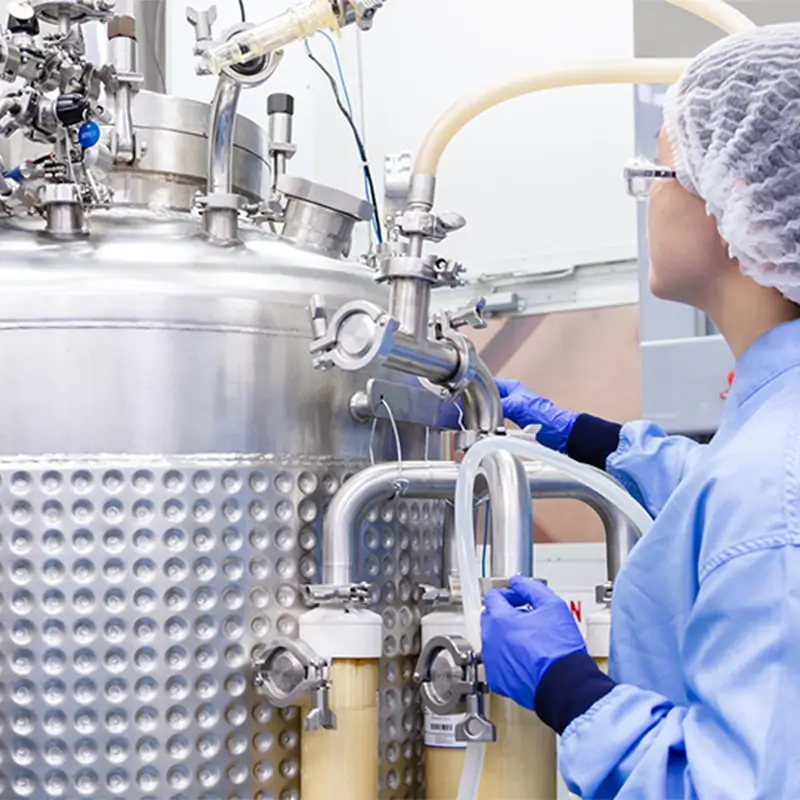
Application of Solid-State Fermentation in Producing Bio-inputs to Enhance Soil and Plant Productivity in Agriculture
Solid-state fermentation (SSF) is recognized as one of the most advanced technologies in agricultural biotechnology, and has attracted the attention of researchers and experts worldwide for years. This method utilizes beneficial microorganisms on solid substrates with controlled moisture levels, enabling the conversion of agricultural waste into valuable inputs such as enzymes, biocomposts, and biostimulants. The SSF process not only helps reduce waste and enhance the efficiency of natural resources, but also plays a key role in improving soil quality and boosting plant growth in sustainable farming systems.
According to reports from the Food and Agriculture Organization (FAO) of the United Nations, over 30% of global food production is lost due to waste. In this context, innovative technologies like solid-state fermentation can address critical environmental and economic concerns worldwide. By transforming organic waste into nutrient-rich resources, SSF paves the way for highly efficient and environmentally sustainable agriculture.
Thanks to scientific advancements over recent decades, there is now a deeper understanding of the principles of biotechnology and the practical applications of solid-state fermentation. The following sections will explore key concepts, real-world uses, advantages, challenges, and future prospects of implementing this technology in the production of biological inputs.
Fundamentals and Core Concepts of Solid-State Fermentation
Solid-state fermentation (SSF) is a biological process in which microorganisms such as fungi and bacteria grow and carry out metabolic activity on solid substrates with low or controlled moisture content. Unlike liquid fermentation, SSF promotes microbial growth on solid surfaces, allowing for the production of high-concentration and diverse bioproducts under favorable conditions.
This technology is applied in the production of various enzymes, bio-composts, biostimulants, and even certain pharmaceutical products. Notable advantages of this process include efficient use of water and energy resources, reduced production costs, and environmental sustainability.
– The Role of Fermentation in Agricultural Waste Conversion
One of the key advantages of solid-state fermentation is its ability to convert agricultural waste into valuable resources. Post-harvest and processing residues can be transformed through SSF into nutrient-rich inputs that benefit both soil and plant health. This not only reduces waste and environmental pollution but also contributes to the generation of high-value organic fertilizers and agricultural inputs.
According to the FAO, converting agricultural waste into bio-inputs can significantly mitigate the economic losses caused by waste. Numerous studies have shown that implementing modern technologies in this area can reduce production costs by up to 40%.
Practical Applications of Bio-input Production through Solid-State Fermentation
In recent decades, solid-state fermentation (SSF) has emerged as an innovative approach for producing bio-inputs in the agricultural industry. By leveraging biological processes, this technology enables the creation of a wide range of products that offer both economic and environmental advantages.
– Enzyme and Bioactive Compound Production
One of the most prominent applications of SSF is the production of enzymes. Microorganisms such as Bacillus subtilis and Aspergillus niger are commonly used in this process due to their ability to generate various digestive, fermentative, and bioactive enzymes. These enzymes play a vital role in plant metabolic functions and the breakdown of organic matter in the soil.
Studies conducted at international universities have shown that enzymes produced through SSF can increase the soil’s water retention capacity by up to 35%, while also enhancing the absorption of nutrients by plant roots.
– Transforming Waste into Valuable Products
One of the major challenges in agriculture is managing post-harvest waste. Organic residues, which are rich in nutrients, often become environmental pollutants if left untreated. Through solid-state fermentation, these residues can be converted into useful inputs such as enriched composts and biofertilizers.
Extensive research has demonstrated that processing agricultural waste via SSF leads to an increase in soil organic matter and improves soil structure. As a result, this not only reduces environmental pollution but also significantly enhances soil productivity and plant growth.
Benefits of Soil Improvement and Enhanced Plant Productivity through SSF
The solid-state fermentation (SSF) process has a direct impact on improving soil quality and boosting plant growth and productivity. By generating a variety of bio-inputs, SSF not only enriches the soil but also enhances its microbial activity and biological processes.
– Improving Soil Structure and Enhancing Microbial Activity
One of the major advantages of using SSF-derived bio-inputs is the improvement of the soil’s physical and chemical structure. The addition of composts produced through this process can reduce soil compaction and increase its permeability to water and air. These changes promote root development and stimulate microbial activity in the soil.
Microbial activity plays a crucial role in decomposing organic matter and releasing essential nutrients for plants. As a result, the soil’s capacity to retain water and nutrients is significantly enhanced. Research conducted in agricultural research centers indicates that the application of SSF-based bio-inputs can increase soil microbial activity by approximately 25 to 40 percent.
– Reducing Dependency on Chemical Fertilizers
Using bio-inputs as a nutrient source for plants reduces the reliance on chemical fertilizers. While chemical fertilizers may offer rapid nutrient delivery, they often contribute to environmental pollution and degrade the soil’s natural structure. Solid-state fermentation transforms organic waste into nutrient-rich fertilizers with no harmful side effects.
This approach is not only cost-effective but also supports biodiversity and helps maintain the sustainability of agricultural ecosystems. Some studies have shown that the use of SSF-produced bio-inputs can reduce chemical fertilizer consumption on farms by up to 50%.
On this topic, Dr. Amir Reza Safaei, Assistant Professor at the National Institute of Animal Science, remarks:
– Dr. Amir Reza Safaei, Assistant Professor, National Institute of Animal Science: “The production of bio-inputs through solid-state fermentation plays a significant role in improving soil structure and enhancing plant productivity.”
His statement underscores the importance of replacing traditional methods with innovative technologies to build a smart and sustainable agricultural system.
Scientific Research and Statistical Data on Solid-State Fermentation
One of the most notable strengths of solid-state fermentation (SSF) is its scientific credibility, supported by validated data and statistics from reputable organizations and research institutions. Extensive global studies have been conducted on this technology, further solidifying its value in the eyes of experts and specialists.
– Statistical Reports from International Organizations
According to reports published by the Food and Agriculture Organization (FAO) of the United Nations, nearly 30% of global food production is lost due to waste and inefficiencies in production and consumption chains. The adoption of innovative technologies such as SSF can significantly reduce this figure while conserving resources and boosting agricultural productivity.
Studies conducted at leading European and Asian universities have shown that implementing SSF in the production of bio-inputs increases nutrient concentration, reduces production costs, and improves crop performance. Some research even highlights a 40% to 50% increase in crop yield on farms that have adopted this technology.
Scientific interest in solid-state fermentation is growing rapidly, with more researchers dedicating their efforts to exploring its potential. Renowned scientists and specialists have shared their documented insights and findings in this field.
For example, Dr. Sandra Mattei, a researcher in agricultural biotechnology, has spoken about the positive effects of this technology on soil quality and the reduction of agricultural waste:
– Dr. Sandra Mattei, Researcher in Agricultural Biotechnology: “Solid-state fermentation, as a green technology, enables the production of natural biostimulants from organic waste, significantly enhancing agricultural productivity.”
Scientific insights, combined with statistical data and field research, highlight the vital role of modern technologies in transforming waste into valuable agricultural inputs — a shift that could revolutionize traditional farming practices.
Challenges and Solutions in Solid-State Fermentation Technology
Like any emerging technology, solid-state fermentation (SSF) faces its own set of technical and managerial challenges. Implementing SSF on an industrial scale is not without difficulties. This section explores the key obstacles and provides insights into potential solutions.
– Technical and Managerial Barriers to Implementation
Among the major challenges in utilizing SSF are the precise control of moisture, temperature, and the physical conditions of solid substrates. Issues such as substrate inconsistency, unwanted microbial contamination, and scaling complexities make industrial application more demanding.
Another important aspect is the need for highly specialized technical expertise and up-to-date knowledge in environmental and bioprocess engineering to ensure optimal conditions for microbial growth and activity. Additionally, the high initial investment required for setting up SSF equipment and related technologies often acts as a barrier for new investors entering the field.
– Innovative Solutions and Development Prospects
Despite these challenges, recent research and the integration of modern technologies such as the Internet of Things (IoT) and smart control systems have opened up new possibilities for more efficient SSF management. These innovations enable better precision in controlling environmental parameters, minimizing the risks associated with suboptimal conditions.
Moreover, the use of advanced substrates with nano-engineered structures and improved physical properties offers promising pathways for enhancing the production of bio-inputs. Studies in recent years have shown that implementing intelligent monitoring and automation systems can significantly improve both the efficiency and quality of the final products.
This technological evolution has sparked growing interest among investors and companies operating in the field of modern agriculture. From an economic perspective, the reduction of production costs and the increase in product efficiency have played a pivotal role in attracting financial resources and governmental support—paving the way for the expansion of a sustainable agricultural industry.
Future Outlook and the Impact of SSF Technology on Sustainable Agriculture
With the rapid advancement of modern technologies in the agricultural sector, solid-state fermentation (SSF) is emerging as a key driver in transforming the agricultural value chain. This section explores the forward-looking potential and economic opportunities arising from the adoption of SSF.
– Emerging Trends and Economic Opportunities
Recent progress in microbiology, nanotechnology, and smart systems has opened up new avenues for utilizing SSF in the production of bio-inputs for agriculture. As automation and monitoring technologies continue to evolve, the efficiency and scalability of SSF processes are expected to reach new heights.
In addition, growing environmental awareness and increasing demand for organic and sustainable products have created favorable conditions for further investment in this field. Economic studies suggest that implementing SSF can lead to significant reductions in production costs and contribute to increased agricultural gross output.
– The Role of Technology in Enhancing Soil Health and Crop Productivity
Bio-inputs derived from solid-state fermentation play a vital role in improving soil health and quality. By enriching the soil with organic matter and boosting microbial activity, SSF helps enhance the soil’s physical and chemical properties, leading to improved plant growth and nutrient uptake.
Beyond improving soil structure, this technology also contributes to reducing pollution caused by excessive use of chemical fertilizers. Various smart farming projects in developed countries have reported outstanding results from applying SSF — with some regions experiencing over a 30% increase in crop yields.
Moreover, research indicates that long-term use of bio-inputs can aid in carbon sequestration in soil, offering a promising approach to mitigating the effects of climate change.
Conclusion and Expert Recommendations on Solid-State Fermentation
A comprehensive review of the discussed topics highlights solid-state fermentation (SSF) as one of the most promising technologies for sustainable agriculture. By converting organic waste into effective bio-inputs, SSF plays a pivotal role in improving soil structure, enhancing microbial activity, and reducing reliance on chemical fertilizers—ultimately supporting the development of resilient agricultural ecosystems.
From both scientific and economic perspectives, documented research from Europe, Asia, and Latin America demonstrates that SSF not only enables the production of high-value products but also contributes to waste reduction and improved overall efficiency across the agricultural value chain.
– Key Takeaways
Based on statistical data from reputable international organizations, academic research, and field studies, it is clear that SSF holds significant potential in building sustainable agricultural systems. The technology improves soil quality, enhances microbial processes, reduces excessive use of chemical fertilizers, and significantly boosts crop productivity.
Experts recommend investing in research and the development of SSF technologies as a strategic step toward optimizing organic resource utilization and converting waste into nutrient-rich inputs. Governmental bodies, academic institutions, and the private sector must work collaboratively to advance this technology.
Below are some key recommendations for improving SSF implementation:
First, the integration of smart monitoring and control systems in production environments is essential. Using sensors and IoT technologies can help accurately manage environmental parameters such as moisture and temperature, reducing the risk of undesirable fluctuations.
Second, fostering collaboration between research centers and industry is vital for technology transfer and the creation of smart business models in this field. These partnerships can reduce initial investment costs and enhance process efficiency.
Lastly, increasing investment in education and research related to biotechnology and environmental engineering will help train skilled professionals who can further advance SSF technologies and support their widespread adoption.
As Dr. Adriana Artola, a leading professor in biological processes, points out:
– Dr. Adriana Artola, University Professor: “Utilizing solid-state fermentation to produce bio-inputs not only transforms waste into valuable resources, but also improves the overall structure of agricultural ecosystems and paves the way for sustainable growth.”
This perspective emphasizes the importance of investing in innovative technologies and transferring knowledge from research labs to practical applications. Relevant ministries and institutions are encouraged to launch large-scale pilot and research programs with both technical and financial support.
In the long term, SSF is expected to become a cornerstone of smart, sustainable agriculture. Future advancements will increasingly integrate this technology with circular economy principles and natural resource management, generating broad benefits for agriculture, the environment, and society at large.
Overall, the approach of converting waste into nutrient-rich inputs and optimizing the use of organic resources offers a bright outlook for food security and environmental sustainability. Amidst the challenges facing the agriculture industry, SSF presents a comprehensive, forward-thinking solution to many pressing environmental issues.
Therefore, it is highly recommended that all stakeholders involved in agricultural development—from universities to private enterprises and governmental agencies—prioritize the adoption of advanced technologies such as SSF in order to revolutionize the agricultural value chain both economically and environmentally.
In conclusion, SSF, despite its challenges, offers a new pathway toward enhanced productivity in agricultural systems. Its successful implementation can create a sustainable cycle—reducing waste, improving soil health, and boosting plant growth—which ultimately leads to higher yields and greater food security.
This scientific advancement marks a potential turning point in global efforts to address food crises and climate change. Leveraging organic resources as a core strategy in tackling environmental and economic challenges reflects the deep understanding shared by today’s agricultural scientists and experts.
Given the vast potential of SSF and its proven success in multiple countries, we can expect continued innovation and global expansion of its applications in the decades ahead. This is especially true for regions with abundant organic waste, where SSF could fundamentally transform production and consumption practices in agriculture.
For this reason, investing in field research and next-generation technologies related to SSF should be considered a strategic priority by scientific, industrial, and governmental sectors. International collaboration and knowledge exchange will accelerate development and boost the overall performance of agriculture.
Ultimately, solid-state fermentation not only transforms waste into valuable inputs but also lays the foundation for a smart, self-reliant, and resilient agricultural system. Through the integration of science, industry, and policymaking, SSF can revolutionize food supply chains and improve the quality of agricultural products worldwide.
Looking critically at past experiences and ongoing studies, it becomes evident that modern technologies like SSF are not just alternatives for waste management and soil improvement—they are long-term investments that can drive sustainable development and add value throughout the agricultural chain.
Based on all the above, the final recommendation is for policymakers and agricultural industry leaders to develop comprehensive strategies, invest consistently in research and technology, and build the necessary infrastructure to foster the growth of SSF and similar innovations that can truly advance sustainable agricultural ecosystems.
In the end, it is clear that SSF—fueled by modern science and global success stories—is poised to shape a brighter, more sustainable future for agriculture. A future in which waste becomes wealth, and productivity reaches new heights.