
Tech & Innovation in Food Security
The Role of Technology and Innovation in Strengthening Food Security: Challenges and Opportunities for Iran
Food security is a critical issue in national development programs and is considered one of the main pillars of national security alongside energy and economic security. The importance of this issue has grown significantly in recent decades due to rapid global population growth, increasing limitations on natural resources, environmental crises, and climate change. Food security ensures that all individuals in society have access to sufficient, safe, and nutritious food for an active and healthy life.
The increasing demand for food due to population growth has placed additional pressure on natural resources, forcing countries to adopt advanced technologies to address these challenges. Environmental crises such as severe droughts, declining water resources, and soil pollution further threaten sustainable food production.
Technology and innovation serve as powerful tools in optimizing food production, distribution, and storage processes. The use of cutting-edge technologies such as artificial intelligence, biotechnology, the Internet of Things (IoT), and smart agricultural systems can enhance the food supply chain, improve productivity, reduce waste, and strengthen food security both nationally and globally. As environmental crises and climate change exacerbate food security challenges, leveraging technological innovations is not just a necessity but a strategic solution for maintaining the sustainability of food supply chains.
This article explores the role of technology and innovation in enhancing food security, focusing on the opportunities and challenges facing Iran. It highlights the significance of advanced technologies, including artificial intelligence, IoT, and biotechnology, in improving food security outcomes.
The Importance of Food Security in National and Global Economies
Food security is defined as the sustainable access to adequate and safe food for all individuals in a society. This concept encompasses various dimensions, including production, distribution, accessibility, and the sustainability of food resources. The United Nations has identified food security as one of the key goals of sustainable development. Countries that prioritize this indicator have demonstrated greater resilience during economic and environmental crises.
In Iran’s national economy, the agricultural sector plays a crucial role in employment generation and food supply. However, the sector’s low share of large-scale investments and the absence of effective support policies have exposed the country’s food security to multiple threats.
Challenges to Food Security in Iran
– Climate Change and Water Resource Crisis
One of the most significant challenges to food security in Iran is climate change and the decline in water resources. Official statistics indicate that the country’s per capita water resources have drastically decreased over the past two decades, with projections suggesting that this trend will continue. Reduced rainfall, drying rivers and lakes, and excessive groundwater exploitation have exacerbated the water crisis. These conditions have led to a decline in agricultural production and increased reliance on food imports.
– Impact of Economic Sanctions
Economic sanctions have also disrupted the food supply chain. The importation of strategic products such as wheat, corn, oil, and sugar has faced challenges due to trade and currency restrictions, affecting both pricing and accessibility.
– Weak Agricultural Infrastructure
Agricultural infrastructure in Iran remains largely dependent on traditional methods, and the adoption of modern food production and distribution technologies has been slow. The lack of advanced irrigation systems, inadequate agricultural machinery, and the absence of smart monitoring systems have contributed to reduced productivity in food production.
– Insufficient Investment in Agriculture
The agricultural sector accounts for only 3.5% of the country’s large-scale investments, which is significantly below the global average. This indicates a lack of prioritization for agriculture in national economic policies. Insufficient investment in this sector has led to reduced domestic production, increased dependency on imports, and decreased resilience against global crises.
The Role of Technology and Innovation in Strengthening Food Security
– The Use of Artificial Intelligence in Agriculture
Artificial Intelligence (AI) plays a crucial role in optimizing agricultural processes. By analyzing weather, soil, and crop data, AI enables farmers to make more informed decisions. Predictive AI algorithms can determine the optimal timing for planting and harvesting, reducing waste and increasing productivity.
– Internet of Things (IoT) and Smart Agricultural Systems
The Internet of Things (IoT) allows real-time monitoring and control of agricultural processes. Smart sensors measure environmental conditions such as temperature, humidity, and soil moisture, automatically transmitting data to farmers. This data helps optimize water usage, reduce costs, and improve product quality.
– Biotechnology and the Development of Resilient Seeds
Biotechnology is another effective tool in enhancing food security. Through biological technologies, seeds can be developed to withstand drought, soil salinity, and pests. These seeds improve farm yields in unfavorable climatic conditions and boost the production of strategic crops.
– Robotics and Agricultural Mechanization
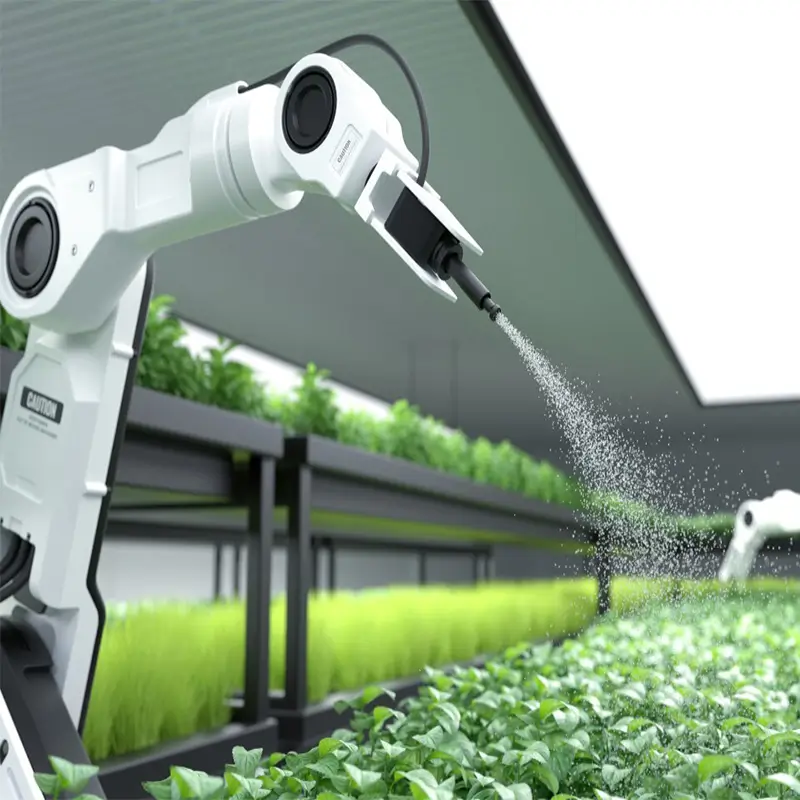
Agricultural robots can perform tasks such as planting, harvesting, and irrigation with high precision. This technology not only reduces labor costs but also increases productivity. Additionally, drones are increasingly being used for farm monitoring and plant health assessments.
Lessons from Successful Countries in Food Security
Several countries have successfully leveraged advanced technologies to achieve significant progress in food security. Notable examples include:
- Netherlands: By utilizing advanced greenhouse systems and AI, the Netherlands has become one of the world’s largest agricultural exporters.
- Israel: Through the adoption of drip irrigation and smart agricultural technologies, Israel has minimized water consumption in agriculture.
- India: By fostering agricultural startups and investing in technology, India has improved farmers’ access to markets and boosted agricultural productivity.
Opportunities for Iran
– Supporting Knowledge-Based Companies
With the growth of the knowledge-based economy in Iran, there are promising opportunities for developing advanced agricultural technologies. Knowledge-based companies can contribute by producing smart agricultural equipment and offering innovative solutions to enhance productivity and reduce reliance on imports.
– Expanding International Cooperation
Collaborating with technologically advanced countries and transferring expertise can enhance Iran’s agricultural infrastructure and food security. Establishing trade agreements and joint investments in smart agriculture are crucial steps toward improving this sector.
– Strengthening Education and Awareness
Educating farmers on the use of modern technologies and enhancing their managerial skills can significantly boost productivity and reduce food waste. Organizing training programs, offering financial incentives, and fostering collaboration between universities and the private sector are essential measures to achieve this goal.
Conclusion
Food security is a strategic issue in national policymaking that requires a strong focus on innovation and technology. Despite challenges such as water scarcity, economic sanctions, and weak infrastructure, opportunities like the growth of knowledge-based companies and the adoption of smart technologies can drive positive transformations in this sector. Learning from successful countries, developing technological infrastructure, and supporting startups and knowledge-based firms are key strategies to strengthen Iran’s food security and enhance its resilience against global crises.